Quick Answer
How do you make smoked buffalo wings with crispy skin?The two-phase method: smoke at 225°F for 1 hour to develop smoke flavor and render fat from the skin, then crank heat to 400-425°F (or transfer to a hot oven) for 20-25 minutes to crisp the skin. Apply buffalo sauce only after the high-heat crisping phase, not during the smoke phase (sauce during smoking turns gummy). This produces wings with genuine smoke depth plus crispy skin - the two things that are difficult to achieve simultaneously. Apply sauce immediately off the smoker/oven, toss, and serve.
The Smoked Wings Challenge: Smoke vs. Crispiness
Smoked wings face a fundamental challenge: the temperature ideal for smoke absorption (225-250°F) is not the temperature ideal for crispy skin (400°F+). At low smoke temperatures, the fat under the skin renders slowly but doesn't evaporate quickly enough to produce the dry, crispy surface needed for crunch.
The solution is a two-phase cook:
- Phase 1 (smoke at low heat): Develops smoke ring, renders subcutaneous fat, infuses smoke flavor into the meat
- Phase 2 (high heat to crisp): The pre-rendered fat crisps the skin quickly at high heat because much of the moisture has already been driven out in Phase 1
This is a technique borrowed from competition barbecue where smoked meats are often "finished" at higher temperatures or under a broiler for texture.
The Temperature Sequence in Detail
Phase 1 - 225°F for 60 minutes:
- Place wings on smoker grates skin-side up
- Maintain 225-250°F throughout this phase
- Wings absorb smoke and fat renders - they won't look crispy yet (they'll look slightly glossy and pale)
- No sauce during this phase
Phase 2 - 400-425°F for 20-25 minutes:
- Options: increase smoker temperature (if your smoker can reach 400°F+), transfer to a preheated 425°F oven, or use a charcoal grill with wings over direct heat
- Wings should reach 165°F internal temperature and skin should be golden-brown and crispy
- Still no sauce during this phase
Post-cook sauce: Remove wings from heat. Toss immediately in warm buffalo sauce. The heat of the wings activates the sauce and allows it to set on the surface.
Wood Choice for Buffalo Wings
Smoke Wood Options for Buffalo Wings
| Wood | Flavor Profile | Intensity | Buffalo Sauce Pairing |
|---|---|---|---|
| Best: Apple or cherry | Sweet, mild, fruity | Light | Best - complementary to buffalo sauce |
| Pecan | Mild, slightly nutty | Medium-light | Excellent - doesn't overpower |
| Hickory | Strong, classic BBQ | Strong | Use sparingly - can overwhelm buffalo |
| Mesquite | Intense, earthy | Very strong | Avoid for buffalo wings |
| Oak | Medium, neutral-leaning | Medium | Good general-purpose choice |
The wood choice matters because buffalo sauce has its own strong flavor - heavy smoke competes rather than complements. Apple wood (mild, slightly sweet, fruity) is the ideal pair because its sweetness echoes the slight pepper-fruit character of cayenne and doesn't fight the sauce's vinegar tang.
Ingredients
- 24 chicken wings, separated at joints
- Dry rub:
- 1 tablespoon baking powder (for crispy skin)
- 1 teaspoon garlic powder
- 1 teaspoon onion powder
- 1 teaspoon smoked paprika
- 1 teaspoon salt
- 1/2 teaspoon black pepper
- Buffalo sauce:
- 3/4 cup buffalo sauce (warm)
Method
- Pat wings completely dry with paper towels. Dry for 30 minutes uncovered in the refrigerator if time allows.
- Mix dry rub ingredients. Toss wings in rub until evenly coated.
- Preheat smoker to 225°F with apple or cherry wood.
- Place wings on smoker skin-side up. Smoke for 60 minutes.
- After 60 minutes: increase smoker temp to 400°F+ OR transfer wings to a preheated 425°F oven. Cook 20-25 minutes until skin is crispy and internal temp reaches 165°F.
- Warm buffalo sauce while wings finish cooking.
- Remove wings from heat. Immediately toss in warm buffalo sauce.
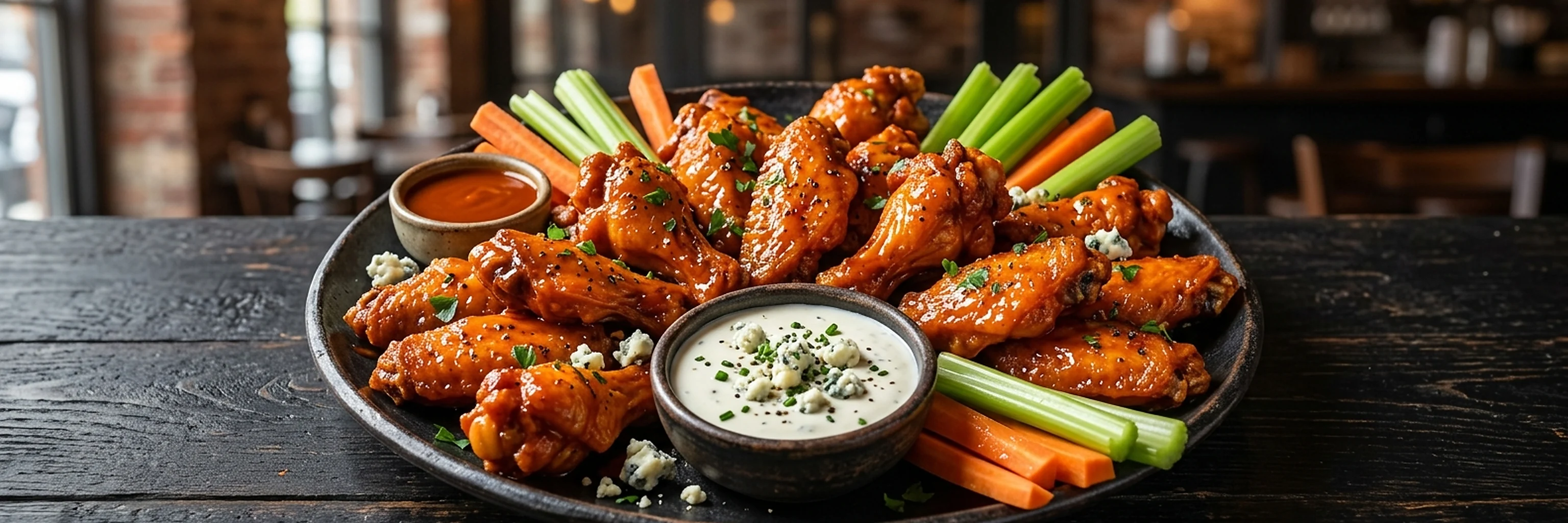
- Serve immediately with blue cheese or ranch and celery sticks.
Tips
- The baking powder in the dry rub is critical for crispy skin even on the smoker - it raises the skin's pH and accelerates Maillard browning at the high-heat finish phase.
- Don't skip the oven finish if your smoker can't reach 400°F. The crispy skin makes a significant difference in the final eating experience.
- For an optional smoky buffalo sauce: add 1/2 teaspoon of chipotle powder to your buffalo sauce. This echoes the smoke from the cooking process in the sauce itself.
Smoked Wings Without a Smoker
No smoker? Approximate the smoke effect with a gas or charcoal grill using the indirect method + wood chips. Place soaked wood chips (apple or cherry, soaked 30 minutes) in a foil packet with holes punched in the top. Place the packet directly on gas burners or coals. Set up indirect heat. Cook wings over indirect heat at 225°F for 45 minutes with the lid closed (to trap smoke). Then move to direct heat at high temp for 10-15 minutes to crisp. Not identical to a smoker but produces a meaningful smoke note.