Quick Answer
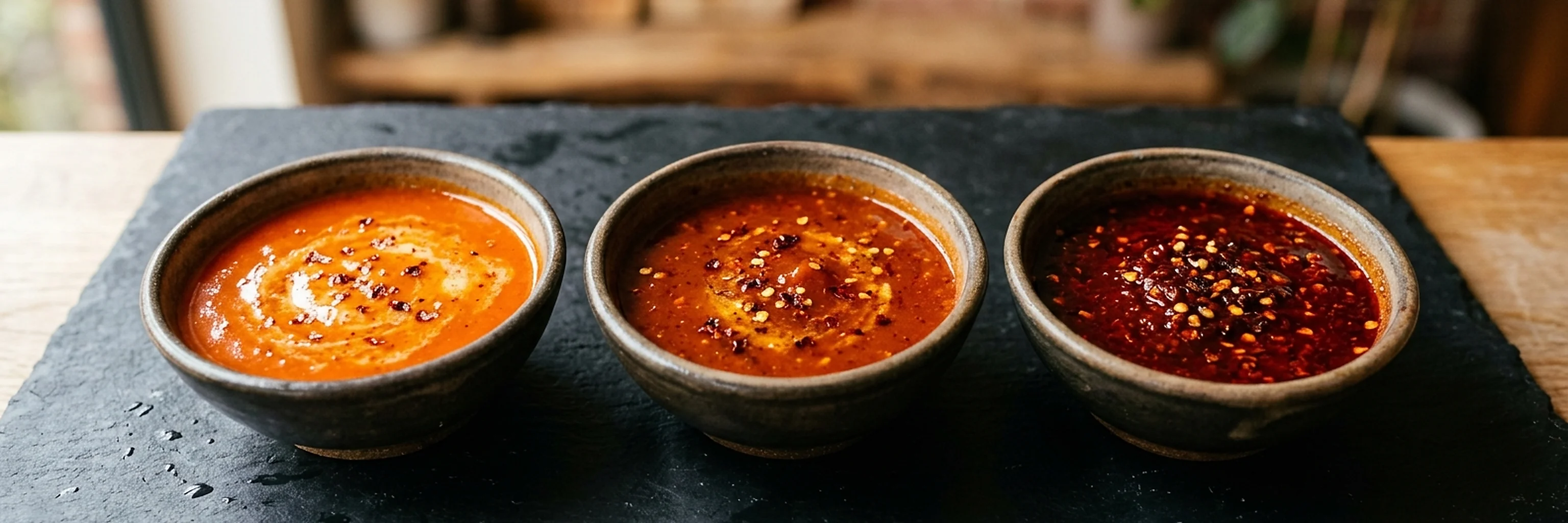
How do you make buffalo sauce from fermented hot sauce?The process is the same as standard buffalo sauce but with one key adjustment: fermented hot sauce (strained and blended) may be slightly thicker and more variable in consistency than commercial hot sauce, requiring a small amount of additional butter or a bit more liquid to achieve the right emulsion. The standard ratio: 1/2 cup fermented hot sauce + 4-5 tablespoons unsalted butter (one extra tablespoon compared to Frank's-based recipe) + optional 1-2 tablespoons fermentation brine to thin. Emulsify over low heat using the cold butter gradual addition method. The finished sauce will be noticeably more complex and flavorful than commercial-base buffalo sauce.
Why Fermented Base Changes the Emulsification
Commercial hot sauces like Frank's RedHot contain xanthan gum and other stabilizers that assist emulsification. These additives help the butter and hot sauce form a stable, cohesive emulsion relatively easily. Homemade fermented hot sauce has no stabilizers - it's simply blended peppers, brine, and vinegar. This changes how the emulsification behaves:
- More variable viscosity: Fermented hot sauce viscosity varies based on how much you strained it, the pepper variety, and fermentation length. Thicker fermented sauce may need thinning with brine; thinner sauce may need slightly less butter.
- Less emulsification assistance: Without xanthan gum, the emulsion requires more precise technique - proper temperature, cold butter, gradual addition. Small shortcuts that work with commercial hot sauce may cause a fermented-base sauce to break.
- More reward: The fermented base provides more flavor depth, more complexity, and more rounded acidity than commercial hot sauce. The extra technique effort is justified by a noticeably superior finished sauce.
Fermented Buffalo Sauce Recipe
Ingredients
- 1/2 cup fermented hot sauce (strained and blended - see fermented hot sauce guide)
- 1-2 tablespoons fermentation brine (reserved from the ferment)
- 4-5 tablespoons unsalted butter, cold, cut into pieces
- 1/4 teaspoon garlic powder (optional - the ferment may have garlic already)
- 1/4 teaspoon Worcestershire sauce (optional - adds umami depth)
- Salt to taste (taste before adding - fermented sauce may already have sufficient salt)
Method
- Ensure your fermented hot sauce is fully blended and strained. It should be smooth, with a consistency similar to commercial hot sauce. If it's thicker, thin with fermentation brine 1 tablespoon at a time until it pours like Frank's. If it's thinner, reduce briefly in a saucepan for 2-3 minutes to concentrate.
- Combine the fermented hot sauce and fermentation brine in a small saucepan. Add garlic powder if using.
- Warm over very low heat until just steaming - target temperature 150-160°F. Do not boil - high heat can break emulsion with fermented base more readily than with commercial hot sauce.
- Cut cold butter into 6-8 small pieces. Add one piece at a time, whisking constantly. Wait for each piece to fully incorporate before adding the next.
- The sauce should thicken and develop a glossy, cohesive appearance as each butter piece incorporates.
- Once all butter is added and sauce is glossy and stable, remove from heat immediately.
- Add Worcestershire sauce if desired. Taste and adjust: add more brine if too thick, a pinch more salt if needed.
- Serve immediately, or cool and refrigerate. Re-emulsify over very low heat before serving.
Tips
- The extra tablespoon of butter (4-5 vs. standard 4) compensates for the lack of stabilizers in homemade fermented sauce. It helps create a more stable emulsion.
- Using fermentation brine to thin the sauce rather than water preserves the complex flavor profile and doesn't dilute the salinity.
- If your fermented sauce is very sour (extended fermentation), reduce the butter slightly - the acidity is strong and 4 tablespoons may be enough.
Emulsification Technique for Fermented Base
The cold butter gradual addition method is especially important with fermented base. A slower, more careful approach yields better results:
- Temperature control is critical: Keep the sauce below simmering throughout the process. Fermented sauce without xanthan gum is more temperature-sensitive - a brief boil breaks the emulsion more readily than commercial sauce would. Use the lowest heat setting on your stove, or use a double boiler (bowl over simmering water) for maximum control.
- Smaller butter pieces: Cut butter into tablespoon-size pieces or smaller. Larger pieces take longer to incorporate and create more temperature disruption as the cold butter lowers the sauce temperature unevenly.
- Consistent whisking: Don't stop whisking between butter additions. Keep the sauce in continuous motion - this mechanical agitation is what creates the emulsion without stabilizers.
- Cold butter is essential: Warm or melted butter doesn't create the emulsion - only cold butter, added gradually to warm (not hot) liquid, produces the correct gradual fat dispersion. If your butter softened at room temperature before use, return it to the refrigerator for 15 minutes.
Troubleshooting Fermented Buffalo Sauce
Common Problems and Solutions
| Problem | Cause | Solution |
|---|---|---|
| Best: Sauce breaks/separates immediately | Too high heat, or butter too warm | Start over with cold butter over very low heat |
| Sauce is too thin | Fermented hot sauce too watery, or not enough butter | Add more cold butter pieces, whisking constantly |
| Sauce is too thick | Fermented hot sauce too thick (not enough brine) | Add fermentation brine 1 tsp at a time while whisking |
| Sauce tastes too sour/sharp | Extended fermentation, high lactic acid | Add 1/2 tbsp honey or extra butter to balance |
| Sauce lacks heat | Low-heat ferment peppers used | Add 1/4 tsp cayenne powder or extra hot sauce to taste |
For the most common broken emulsion scenario, see the full fix broken buffalo sauce guide - the recovery methods work for fermented base sauce as well as commercial hot sauce base.
Building a Fermented Buffalo Sauce Practice
Once you've made fermented hot sauce and used it as a buffalo sauce base, you'll likely never go back to commercial sauce for special occasions. The practical workflow: maintain a continuous fermentation rotation - start a new jar when you process the previous one. With two 1-quart jars fermenting at offset times, you always have one at peak fermentation readiness and one that's newer. Each jar produces 1-1.5 cups of strained fermented hot sauce, which makes 3-4 batches of buffalo sauce. This sustainable production cycle means you always have handmade fermented base available.