Quick Answer
How do I fix buffalo sauce that went wrong?Common buffalo sauce fixes: Separated (oily layer on top) - add cold butter over very low heat while whisking; Too thin - add more butter or simmer 3-5 minutes to reduce; Not sticking to wings - dry wings thoroughly, sauce immediately after cooking, use bowl-toss method; Too hot - add more butter and honey (fat and sweetness reduce perceived heat); Bitter - add 1-2 teaspoons honey and extra butter; start over if burned; Too salty - more butter, honey, or add a fresh batch of hot sauce. The good news: most buffalo sauce problems except burning are fixable with additional butter.
Quick Problem Diagnosis Chart
Buffalo Sauce Problem Diagnosis
| Symptom | Likely Cause | Quick Fix |
|---|---|---|
| Best: Oily layer floating on top | Emulsion broken | Cold butter + whisk over low heat |
| Sauce runs off wings immediately | Too thin or broken emulsion | More butter; bowl-toss while hot |
| Sauce doesn't coat spoon | Too thin - too little butter | Add 1 tbsp butter, whisk in |
| Paste-like, too thick | Too much butter or over-reduced | Add 1-2 tsp hot sauce, stir |
| Bitter or acrid flavor | Burned butter or burned garlic | Start over - can't fix burns |
| Harsh bitterness (not burned) | Excess cayenne or seed compounds | Add honey + more butter |
| Way too spicy | Too much hot sauce | Add more butter + honey |
| Not spicy enough | Too much butter | Add more hot sauce; adjust ratio |
| Too salty | Hot sauce sodium or salted butter | More butter + honey to balance |
| Flat, no tang | Vinegar cooked off | Add fresh hot sauce splash |
| Sauce solidifies cold | Butter fat setting | Normal - reheat and whisk |
| Sauce won't stay warm | Cooling from heat | Steam table or double boiler |
Problem: Sauce Has Separated (Broken Emulsion)
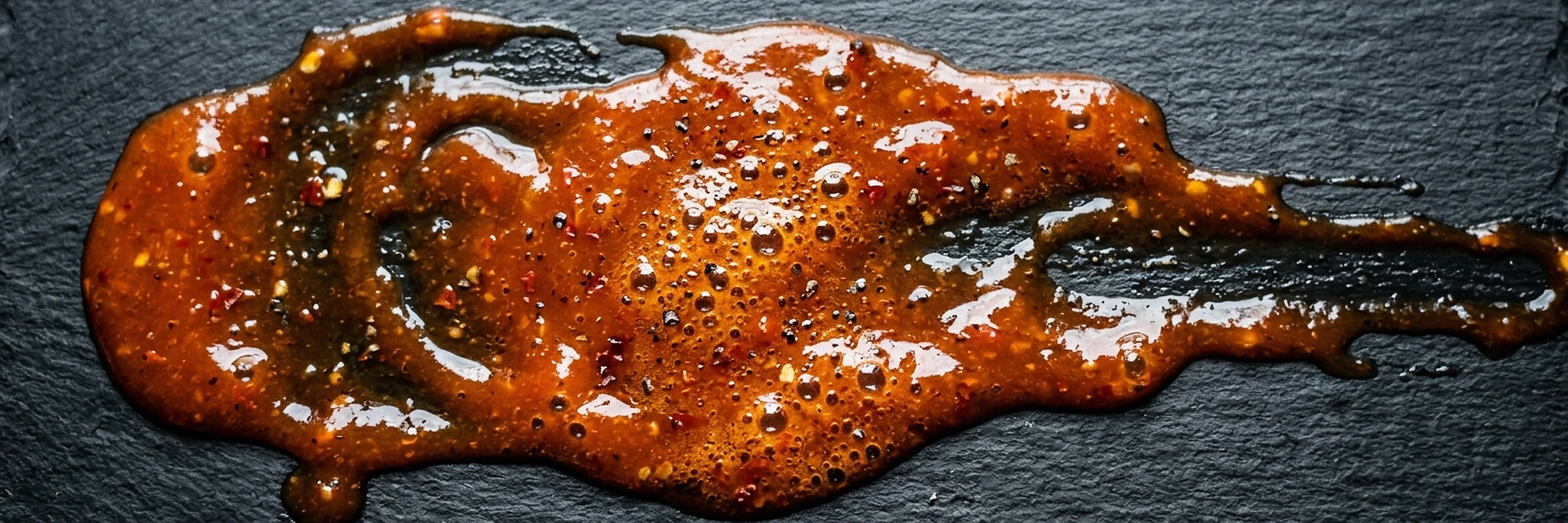
A broken buffalo sauce has an oily layer on top and a thin, watery liquid below. It looks greasy rather than creamy and uniform. Wings coated in broken sauce get uneven, oily coverage.
Fix: Return the sauce to a saucepan over the lowest possible heat setting. Whisk vigorously while warming. Add 1 tablespoon cold butter (refrigerator cold), whisking it in completely before adding more if needed. The cold butter re-introduces fresh emulsification sites and should pull the sauce back together in 60-90 seconds.
Immersion blender option: Pour broken sauce into a tall container, add 1 tablespoon cold butter, and blend with an immersion blender for 30 seconds. More effective than hand-whisking for severely broken sauce.
For the full explanation and prevention, see buffalo sauce won't emulsify.
Problem: Sauce Too Thin
Thin sauce runs off wings rather than coating, pools on the plate, and lacks the body to adhere properly.
Fix 1 (best): Add more butter - 1 tablespoon at a time, whisked in over low heat. Each tablespoon noticeably thickens the sauce. Go to 5 or even 6 tablespoons per 1/2 cup hot sauce for very thick sauce.
Fix 2: Reduce the sauce. Simmer gently (not boiling) for 3-5 minutes, stirring constantly. This concentrates the sauce and increases viscosity.
Fix 3: Cornstarch slurry - 1/2 teaspoon cornstarch dissolved in 1 teaspoon cold water, whisked into simmering sauce. Thickens without flavor change.
Full guide: buffalo sauce too thin - 6 methods.
Problem: Sauce Too Thick
Overly thick buffalo sauce (paste-like, doesn't flow freely) happens when the butter ratio is too high or the sauce was reduced too much.
Fix: Add small amounts of the hot sauce (same hot sauce you used, or apple cider vinegar) one teaspoon at a time, whisking in and testing consistency. Warm the sauce gently first - cold sauce thickens further and won't thin accurately. Target: sauce that coats a spoon but drips slowly (3-4 seconds before running off).
Problem: Sauce Not Sticking to Wings
Sauce that slides off wings instead of adhering has multiple potential causes requiring different fixes.
Most common cause: wet wings. Surface moisture creates a steam barrier. Fix: pat wings completely dry with paper towels before cooking; let cooked wings rest 60 seconds on a rack before saucing.
Second cause: cold wings. Sauce solidifies on contact with cold wing surface. Fix: sauce wings immediately while both wings and sauce are hot.
Third cause: broken sauce. Oil and water coat wings separately and unevenly. Fix: re-emulsify before saucing.
Full guide: buffalo sauce not sticking - 5 causes.
Problem: Too Hot (or Not Hot Enough)
Too hot: Sauce has more heat than intended. Fix: add more butter - fat reduces capsaicin concentration and perception. Add 1 tablespoon butter at a time until heat level drops to acceptable range. Alternatively: add 1-2 teaspoons honey (sweetness counteracts heat perception) or increase volume with additional hot sauce diluted with extra butter.
Not hot enough: Sauce is mild. Fix: add more hot sauce or a pinch of cayenne pepper. Add hot sauce in small amounts (1 teaspoon) and taste between additions. For sustained heat build rather than immediate burn: add habanero hot sauce in small quantities alongside the cayenne base.
Problem: Bitter Flavor
Bitterness in buffalo sauce is either from burning (severe, unrescuable) or from ingredient issues (correctable with sweetness and fat).
Burned bitterness (harsh, acrid, smells scorched): start over. No fix for burned compounds.
Non-burned bitterness (from excess cayenne, pepper seeds, or low-quality hot sauce): add 1-2 teaspoons honey first, taste. Then add extra butter. Most correctable bitterness responds to these two additions. See full bitterness guide.
Problem: Too Salty
Over-salted buffalo sauce usually comes from using salted butter (adds ~360mg sodium per 4 tablespoons) on top of already-salty hot sauce (Frank's: 190mg sodium per teaspoon = 570mg per tablespoon). Combined, this can push the sauce to unacceptable saltiness levels.
Fix: Switch to unsalted butter going forward. For already-made salty sauce: add more unsalted butter to dilute sodium concentration; add honey or maple syrup (sweetness masks salt perception); or blend a fresh low-sodium batch (just hot sauce + unsalted butter) and mix 50/50 with the salty batch to average down.
See adjusting salt in buffalo sauce for the full diagnostic approach.
Problem: Sauce Cools Too Quickly
Buffalo sauce served from a cold bowl or at room temperature for more than 15-20 minutes starts to solidify and separate.
Fix: Use a warmed serving bowl - preheat with hot water, dry, then pour sauce in. Or keep sauce in a small saucepan over the absolute lowest heat setting throughout service. For parties: a mini slow cooker set to "warm" is ideal for holding sauce at 140-160°F indefinitely without risk of burning. For large-scale catering: see the catering scale guide for steam table setup.
The Universal Buffer Fix
When buffalo sauce goes wrong in an unclear direction - something is off but you're not sure exactly what - try this before anything else: add one tablespoon cold unsalted butter while whisking over very low heat, then add one teaspoon honey, then taste. This combination (more butter + honey) corrects or significantly reduces: broken emulsion, thin consistency, excessive heat, minor bitterness, saltiness, and flat flavor. It won't fix burning and it won't re-add vinegar tang, but it addresses the majority of buffalo sauce problems in one move. If the sauce still tastes wrong after this: make a fresh batch.