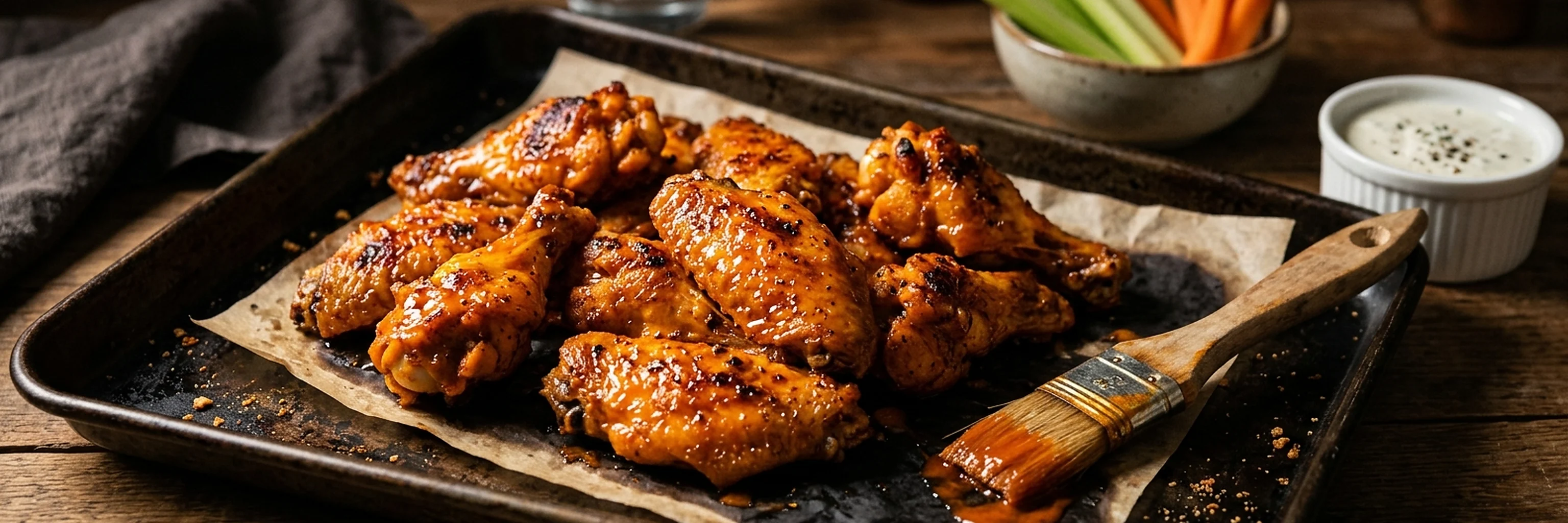
Quick Answer
Why is my buffalo sauce not sticking to wings?Buffalo sauce doesn't stick for five reasons: sauce is too thin (not enough butter), wings are too wet (steaming from excess moisture), wings are too cold (sauce solidifies and slides), emulsion is broken (butter separated into oil), or the tossing technique is wrong (sauce needs to coat, not be poured). The most common fix: pat wings completely dry before frying/baking, make sauce slightly thicker (extra half tablespoon of butter), toss wings in sauce while both are hot, and use a bowl-toss method rather than brushing.
The Five Causes of Buffalo Sauce Not Sticking
Cause 1: Sauce Is Too Thin
Standard buffalo sauce ratio (1/2 cup hot sauce : 4 tablespoons butter) produces sauce thin enough to coat but thick enough to cling. If your sauce ratio has too much hot sauce relative to butter, the result is thin, watery sauce that runs off the wing surface rather than adhering.
Fix: Increase butter by 1 tablespoon per standard batch. The extra fat creates more viscosity and better adhesion. Alternatively, reduce the hot sauce slightly - the ratio of fat to liquid determines coating ability. For maximum coating, aim for a sauce that coats the back of a spoon and doesn't drip off instantly.
See how to thicken buffalo sauce for all thickening approaches.
Cause 2: Wings Are Too Wet
Moisture on the wing surface creates a barrier between the wing skin and the sauce. Steam from wet wings heats and thins the sauce before it can adhere. This is the most common cause of sauce sliding.
Fix: Pat wings completely dry with paper towels before cooking. For baked or air-fried wings: dry the wings, then let them air-dry uncovered in the refrigerator for 1-4 hours (or overnight) before cooking. The dried skin creates a tacky surface that sauce adheres to much better. After cooking: let wings rest 60-90 seconds on a rack before saucing - this allows surface steam to dissipate.
Cause 3: Wings Are Too Cold When Sauced
Buffalo sauce contains butter that solidifies below approximately 95°F. If wings cool significantly before saucing, the butter in the sauce partially solidifies on contact with the cold surface and slides off in clumps rather than coating evenly.
Fix: Sauce wings immediately after cooking while both wings and sauce are hot. Work in batches - don't let wings sit for 5+ minutes before saucing. Keep the sauce warm (140-160°F) throughout service. If you're saucing a large batch: keep cooked wings in a 200°F oven until ready, and keep sauce on very low heat, saucing in smaller sub-batches.
Cause 4: Broken Emulsion
Broken buffalo sauce (butter and hot sauce separated, with visible oily layer) doesn't adhere to wings - the water phase runs off and the oil phase slides separately. A properly emulsified sauce coats evenly; a broken sauce creates uneven, greasy coating.
Fix: Re-emulsify over very low heat while whisking. Add a small piece of cold butter while whisking if the sauce is broken. See how to fix broken buffalo sauce for recovery methods.
Cause 5: Wrong Tossing Technique
Brushing sauce on wings (like paint) produces thinner, less even coating than the proper tossing method. Pouring sauce over wings produces pooling and uneven coverage.
The correct technique: add hot wings to a large bowl, pour sauce over them, and toss vigorously (lift and fold the wings with tongs or by shaking the bowl). Every wing surface should contact the sauce. Let wings sit in the sauce for 30 seconds after tossing - this brief rest allows the sauce to set and adhere better than immediate plating.
Sticking Problem Diagnosis
| Symptom | Likely Cause | Fix |
|---|---|---|
| Best: Sauce pools at bottom of plate | Too thin or broken emulsion | More butter or re-emulsify |
| Sauce slides off hot wings immediately | Wings too wet or sauce too thin | Dry wings thoroughly, thicken sauce |
| Sauce solidifies unevenly in chunks | Wings too cold or sauce over-chilled | Sauce immediately after cooking |
| Greasy sauce that doesn't cling | Broken emulsion (oil separated) | Re-emulsify with cold butter |
| Thin coating that soaks in but doesn't coat | Over-thinned sauce | Reduce or add butter |
The Drying Trick for Maximum Adhesion
The biggest upgrade for sauce adhesion at home: air-dry wings in the refrigerator uncovered overnight before cooking. The cold, dry air of the refrigerator removes surface moisture from the skin, creating a slightly tacky, almost parchment-like surface. Wings dried this way have dramatically better sauce adhesion and also cook crispier (the dry skin renders and crisps faster than wet skin). Salt the wings lightly before refrigerating - the salt draws additional moisture to the surface, which then evaporates. This single step solves most sauce-not-sticking problems at home.