Quick Answer
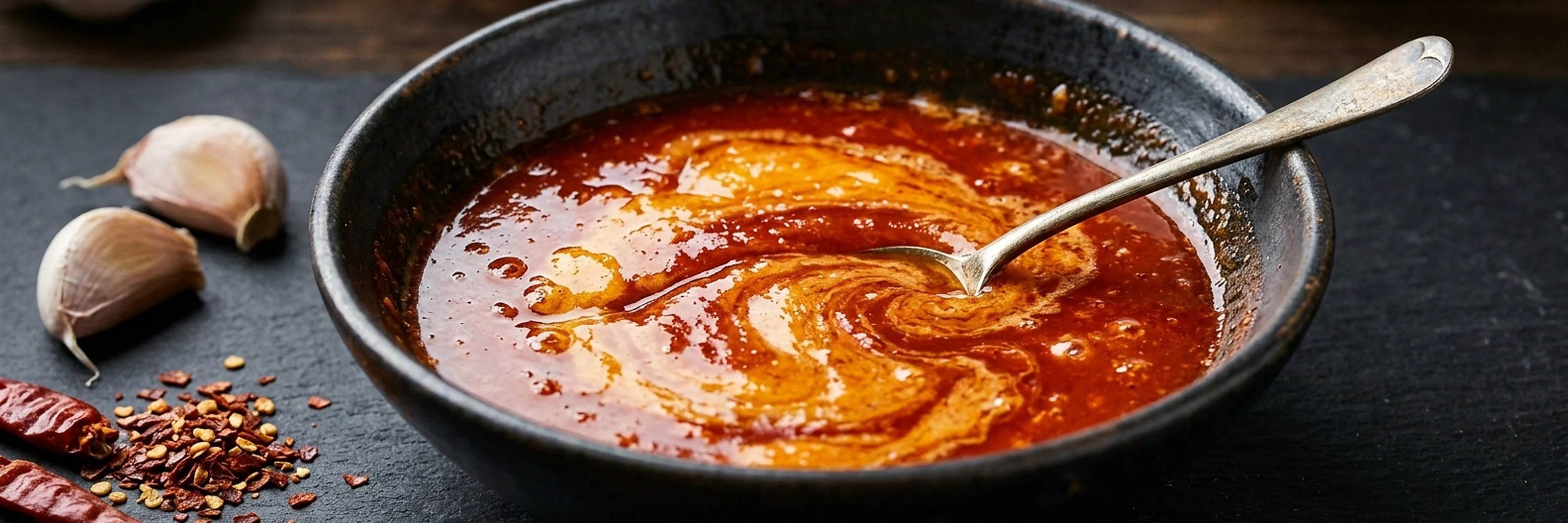
Why does buffalo sauce separate into a greasy orange liquid and a clear acidic liquid?Buffalo sauce is an emulsion - butter fat dispersed into the water phase of hot sauce. It separates (breaks) when the fat and water phases unmix. This happens when: the sauce is heated too aggressively, the butter-to-hot-sauce ratio is off (too little butter or too much), the sauce is allowed to cool and reheat unevenly, or there's insufficient mixing to form the emulsion in the first place. Prevention: make buffalo sauce at low heat, whisk constantly, add butter gradually, and serve immediately after making. Rescue broken sauce: whisk over low heat with a fresh tablespoon of cold butter added incrementally.
The Emulsion Science
Buffalo sauce is an oil-in-water emulsion: butter fat droplets dispersed through the water phase of the hot sauce. Unlike water and oil that separate immediately, a good emulsion stays mixed because:
- Physical agitation (whisking): Breaking fat droplets into small pieces and distributing them throughout the water phase
- Temperature: Warm temperatures keep butter fat liquid enough to disperse
- Natural emulsifiers in butter: Dairy butter contains lecithin and other phospholipids that help stabilize the oil-water interface
Buffalo sauce is an unstable emulsion - it doesn't have a strong emulsifier like egg yolk (which stabilizes mayonnaise permanently). This means it will always tend toward separation given time, temperature changes, or insufficient mixing. Commercial wing sauces use xanthan gum and other stabilizers specifically to prevent this.
Why Buffalo Sauce Breaks
Specific causes of separation:
- Too high heat: Boiling or near-boiling temperatures destabilize the emulsion. The fat droplets coalesce and separate from the water phase. Making buffalo sauce at too high a temperature is the most common cause of breaking.
- Wrong ratio: The ratio of butter to hot sauce matters. Very low butter (1:4 ratio or less) doesn't have enough fat to form a stable emulsion with the volume of water. Very high butter (2:1 or more) can produce a thick, stable emulsion - adding more butter generally helps, not hurts.
- Cooling and reheating: Buffalo sauce stored in the refrigerator solidifies as the butter hardens. When reheated unevenly (microwave on full power, for example), the outer portion may get too hot while the center remains cold - this temperature differential promotes breaking.
- Insufficient agitation: Simply melting butter in hot sauce without whisking doesn't form an emulsion - it just creates two layers. Active whisking is necessary to force the fat into small droplets dispersed throughout the water phase.
- Adding cold butter too fast: Adding cold butter to hot hot sauce causes the butter to melt unevenly - parts melt and float while others don't melt at all. Add butter in small increments, fully incorporating each addition before adding the next.
Prevention Methods
- Use low heat only: Make buffalo sauce at the lowest heat that melts butter - gentle steam, not boiling. Remove from heat as soon as the butter is melted and incorporated.
- Whisk constantly: Don't stir occasionally - whisk actively and continuously while adding butter and hot sauce together.
- Temper the butter: Let cold butter sit at room temperature for 15-20 minutes before adding to hot sauce. Room-temperature butter incorporates more smoothly than cold butter.
- Add a natural emulsifier: A teaspoon of honey or a small amount of mustard (both contain natural emulsifiers) helps stabilize the emulsion. This is why honey buffalo sauce is often more stable than plain buffalo sauce.
- Serve immediately: Use the sauce within 20-30 minutes of making it for best stability. Don't let it sit.
Rescuing Broken Buffalo Sauce
If your buffalo sauce has separated (orange oil on top, acidic liquid below):
- Pour the broken sauce into a small saucepan.
- Heat over very low heat until just warm - not boiling.
- Take 1 tablespoon of cold (refrigerator-cold) butter and add it to the warm broken sauce.
- Whisk vigorously and constantly. The cold butter provides new emulsification sites for the fat droplets to reorganize around.
- Continue whisking, adding another tablespoon of cold butter if needed, until the sauce comes back together into a smooth, homogeneous mixture.
This rescue works 80-90% of the time on recently broken sauce. Very old or extensively overheated sauce may not rescue well - the proteins in the butter may have denatured too much.
Why Cold Butter Rescues Broken Sauce
Cold butter rescues broken emulsions because the cold fat provides fresh, uncharged emulsification sites. In a broken sauce, all the fat has coalesced into large droplets that have lost their emulsification contact with the water phase. Fresh cold butter added in small amounts provides new fat droplets that can re-establish that contact. As you whisk, the previously separated fat is gradually re-incorporated into the new emulsion forming around the cold butter additions.