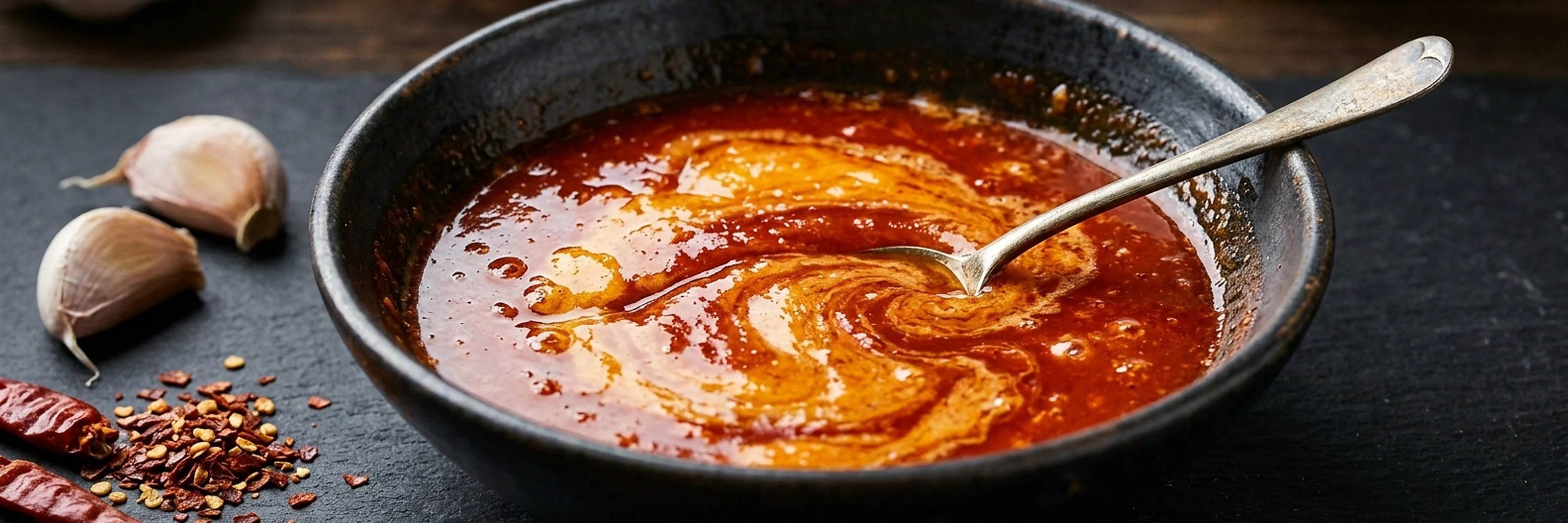
Quick Answer
How do you make buffalo sauce spicier?The cleanest method: add cayenne powder - 1/4 teaspoon per cup of finished sauce doubles the perceived heat without changing flavor balance. For more heat, use a second hot sauce layer (add 1-2 teaspoons of habanero or ghost pepper hot sauce after emulsifying). Avoid just increasing the base hot sauce ratio beyond 3:1 - that makes the sauce thinner and more acidic, not just hotter. The goal is more capsaicin, not more liquid.
Buffalo sauce's medium heat level is intentional - it's designed to be eaten by the plateful, not in single drops. But sometimes medium isn't enough: you're cooking for people who eat ghost pepper wings as a baseline, or you want a genuinely hot wing option alongside the standard recipe, or you're just someone who finds classic buffalo sauce underwhelming in the heat department.
The challenge is adding heat without breaking the emulsion, changing the flavor balance, or making the sauce thinner. This guide covers 7 specific methods, ranked by effectiveness, with quantities and trade-offs for each. For the fundamentals of the sauce itself, the homemade buffalo sauce guide covers all the technique.
Why the Method Matters
The wrong approach - just adding more hot sauce - increases heat, acidity, and thinness simultaneously. At 3:1 hot sauce to butter, the sauce is hot but also thinner and more vinegary. At 4:1, the emulsion starts to break. This isn't a great tradeoff: you get more heat, but the sauce stops coating food well and tastes more like hot sauce than buffalo sauce.
The right approaches add capsaicin without adding liquid. Cayenne powder adds pure heat and nearly zero liquid. Chili extracts are concentrated capsaicin in oil, adding heat with minimal volume. A second hotter hot sauce in small quantities adds heat plus flavor complexity without significantly thinning the emulsion. Each method changes the sauce differently - understanding the difference helps you pick the right one for your goal.
7 Methods at a Glance
Heat-Boosting Methods: Comparison
| Method | Heat Boost | Flavor Impact | Emulsion Risk | Recommended For |
|---|---|---|---|---|
| Increase hot sauce ratio | Moderate | More acidic/vinegary | High at 4:1+ | Mild heat increase only |
| Best: Cayenne powder | Significant | Minimal | None | Clean heat boost |
| Second hot sauce (habanero) | Moderate-High | Adds fruity heat | Very low | Flavor + heat |
| Fresh/dried chili peppers | Moderate | Changes profile significantly | None | Flavor complexity |
| Chipotle hot sauce | Low | Adds smokiness | None | Smoky heat variant |
| Chili extract | Extreme | Minimal (at low doses) | None | Maximum heat |
| Ghost/reaper hot sauce | High-Extreme | Fruity, intense | Very low | Fearless heat seekers |
Method 1: Change the Hot Sauce Ratio
Moving from 2:1 to 3:1 (hot sauce to butter) is the most straightforward approach and produces a noticeably hotter sauce. For 1/2 cup hot sauce at 2:1, you used 4 tablespoons butter. At 3:1, use 2.5-3 tablespoons butter with the same 1/2 cup hot sauce.
The limitation: at 3:1, the sauce is thinner and more acidic. It still has buffalo character, but it moves away from the classic rich texture. This is fine if you want a hot buffalo sauce that's more of a glaze than a coating. If you want maximum heat while maintaining the thick, coating texture of classic buffalo sauce, other methods work better.
Don't Go Above 3:1 Via Ratio
Beyond 3:1 hot sauce to butter, the emulsion destabilizes rapidly. You end up with a thin, separated sauce that doesn't coat food properly. For heat above the 3:1 range, add capsaicin through cayenne or extracts rather than more liquid. See the ratio guide for the physics of why.
Method 2: Cayenne Powder (Best for Clean Heat)
Adding cayenne powder to finished buffalo sauce is the cleanest heat boost available. Cayenne doesn't add liquid, doesn't change the tang or vinegar balance, and integrates invisibly into the flavor profile. It just makes it hotter.
Quantities for a standard batch (1/2 cup hot sauce + 4 tbsp butter):
- Mild heat bump: 1/8 teaspoon cayenne (~+500 SHU)
- Moderate heat boost: 1/4 teaspoon cayenne (~+1,000 SHU)
- Significantly hotter: 1/2 teaspoon cayenne (~+2,000 SHU)
- Aggressively hot: 1 teaspoon cayenne (~+4,000 SHU)
Add cayenne after emulsifying the base sauce. Whisk to combine. Cayenne distributes evenly at room temperature - no heating required. If using store-bought Frank's Buffalo Wing Sauce and want to boost it, add directly to the bottle and shake, or add per batch when you're about to use it.
Cayenne SHU Varies Significantly
The Scoville rating of commercial cayenne powder varies from about 30,000-50,000 SHU depending on the supplier, growing conditions, and processing. Ground cayenne from a major spice brand (McCormick, Penzeys) is typically around 35,000-40,000 SHU. This means 1/4 teaspoon of cayenne added to a 3/4 cup batch of buffalo sauce (which is roughly 300-400 SHU) can push the sauce to 1,000+ SHU - a very noticeable difference. Always taste and adjust.
Method 3: Add a Hotter Hot Sauce
Adding 1-2 teaspoons of a hotter hot sauce to finished buffalo sauce adds both heat and flavor complexity. This is especially effective with habanero-based hot sauces (El Yucateco, Melinda's, Yellowbird) because habanero brings fruity sweetness alongside intense heat that complements the tangy buffalo base well.
Quantities for a standard batch:
- Noticeable boost: 1 teaspoon habanero hot sauce
- Significant boost: 2 teaspoons habanero hot sauce
- Very hot: 1 tablespoon habanero hot sauce
Add after emulsifying the base sauce and whisk to combine. The small volume of secondary hot sauce doesn't significantly affect emulsion stability.
For a different heat character, try smoky chipotle hot sauce (Tabasco Chipotle, Cholula Chipotle) - this produces a smoky, slightly sweet heat that's notably different from standard buffalo but works well as a variation.
Method 4: Fresh Chili Peppers
Blending fresh or rehydrated dried chili peppers into buffalo sauce adds heat plus significant flavor complexity. This is a more substantial recipe modification than the others - the result is a distinct chili-forward buffalo sauce, not just hotter standard buffalo sauce.
Method: Sauté 1-2 serranos or 1 habanero (stemmed, seeded for less heat, unseeded for maximum) in a teaspoon of butter for 2 minutes. Cool slightly, blend with the base buffalo sauce. The blending integrates the pepper into the emulsion and distributes heat evenly.
This works best when you want a buffalo sauce with a more complex, layered heat - multiple peppers that build and linger - rather than a one-note heat spike. It also adds slight texture from the pepper pulp (straining through a fine-mesh sieve creates a smoother sauce if desired).
Method 5: Chili Extracts (Maximum Heat)
Chili extracts (Blair's, Da Bomb, Carolina Reaper extract, etc.) are concentrated capsaicin in an oil carrier. They measure in the millions of SHU. A single drop can make an entire batch of buffalo sauce intensely hot.
Use extreme caution with extraction quantities:
- Start with 1-2 drops for an entire standard batch
- Add to the finished sauce (not while cooking - the heat doesn't cook off)
- Mix thoroughly and taste carefully (literally - small taste on a spoon, wait 60 seconds)
- Don't apply to wings and taste immediately - capsaicin from extracts has a delayed onset of 30-60 seconds
The advantage of extracts over simply adding more hot sauce: they're neutral in flavor (most pure capsaicin extracts have minimal taste beyond heat), so the buffalo sauce flavor profile stays intact. You're adding heat without adding vinegar, pepper flavor, or liquid volume.
Method 6: Compound Approach (Best for Consistently Hot Results)
For a reliably, significantly hot buffalo sauce that still has excellent buffalo flavor, the compound approach works best:
- Start with Frank's RedHot XTRA Hot (2,000 SHU) instead of Original (450 SHU) as your base
- Use the standard 2:1 ratio (the XTRA Hot + butter combination)
- After emulsifying, add 1/4 teaspoon cayenne powder
- Optional: 1 teaspoon habanero hot sauce for fruity complexity
This compound approach builds on a hotter base rather than trying to push standard hot sauce past its limits. The result is a sauce that reads as hot buffalo sauce rather than an adulterated standard sauce - the heat is integrated into the flavor, not sitting on top of it.