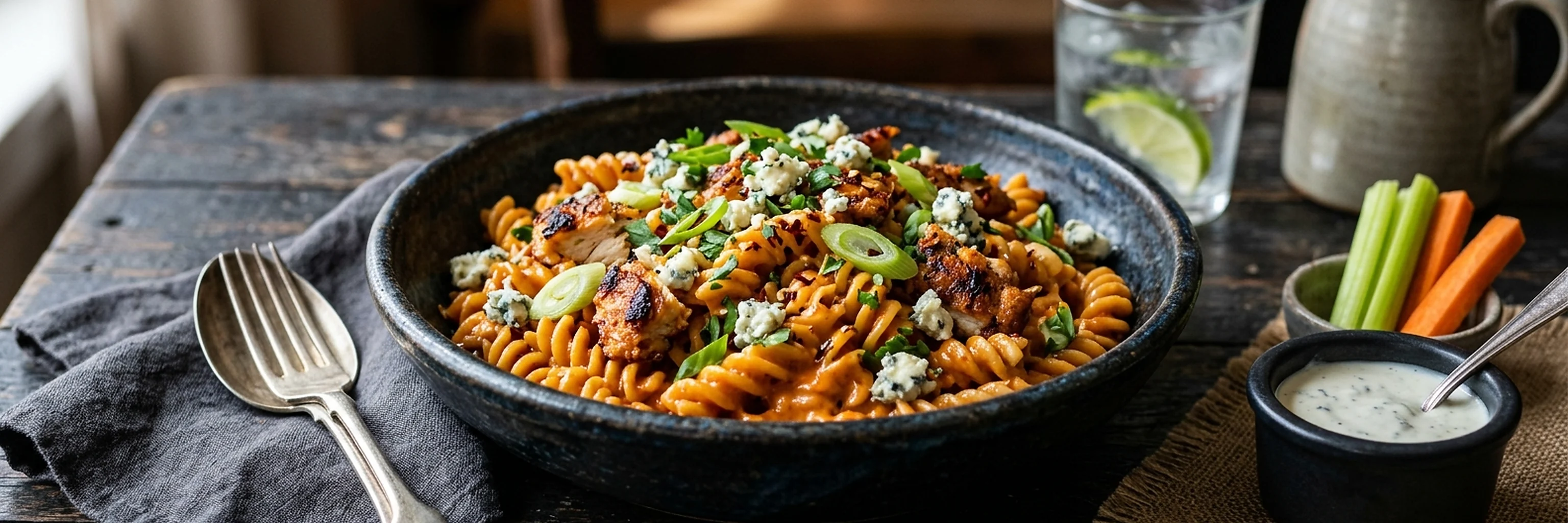
Quick Answer
Can you combine blue cheese and buffalo sauce?Yes - combining them works well in certain formats, but the method matters. Combining buffalo sauce with blue cheese dressing (not raw crumbles) produces a smooth, creamy sauce with balanced heat and funk. The ratio: 2 parts buffalo sauce to 1 part blue cheese dressing produces a sauce that's still clearly buffalo-forward but with noticeable blue cheese creaminess. Adding raw crumbles directly to hot buffalo sauce creates an unpleasant grainy texture. For a smooth combination: always use blue cheese dressing (not crumbles) as the base ingredient.
Does Combining Blue Cheese and Buffalo Sauce Work?
Buffalo sauce and blue cheese dressing are the classic pairing - served alongside each other at every wing restaurant. Combining them into a single sauce produces a format with specific advantages:
- Built-in cooling: The dairy fat and protein in blue cheese moderates the heat in every bite of the sauce, rather than relying on guests to dip. This is useful for crowd situations where some guests want less heat.
- More complex flavor: Blue cheese brings a sharp, pungent fermented-dairy flavor that adds an entirely new dimension to buffalo sauce.
- One-sauce convenience: For buffalo chicken dishes that are already assembled (wraps, pizzas, sandwiches), a combined sauce is simpler than maintaining both separately.
The tradeoff: the combined sauce is more perishable than plain buffalo sauce (dairy proteins), slightly thicker which may affect coating applications, and the blue cheese funk may not be to everyone's taste.
Two Formats: Dressing-Based vs. Crumble-Based
Blue Cheese Combination Methods
| Method | Texture | Flavor Integration | Best Application |
|---|---|---|---|
| Best: Buffalo + blue cheese dressing (2:1) | Smooth, creamy | Fully integrated | Dipping sauce, spread, drizzle |
| Buffalo + blue cheese crumbles (warmed) | Chunky, bits of cheese | Partial - cheese melts unevenly | Warm dip only |
| Blue cheese as dipping accompaniment (separate) | Both textures maintained | Not combined - contrast pairing | Traditional wing service |
Dressing-based (recommended): Mix blue cheese dressing with buffalo sauce. The dressing has already emulsified the blue cheese - it blends smoothly. This works cold (for spreads and dressings) and warm (for dipping sauces).
Crumble-based (limited use): Adding raw blue cheese crumbles directly to warm buffalo sauce creates an uneven result - some crumbles melt partially, some don't, creating grainy pockets. Only appropriate for a warm baked dip where the crumbles melt completely during cooking.
Ingredients
- 2/3 cup buffalo sauce (Frank's RedHot Buffalo Wing Sauce or homemade)
- 1/3 cup blue cheese dressing (full-fat, not low-fat)
- 1/2 teaspoon garlic powder
- 1/4 teaspoon black pepper
- Optional: 2 tablespoons blue cheese crumbles stirred in for texture
Method
- Combine buffalo sauce and blue cheese dressing in a bowl.
- Whisk vigorously until smooth and fully combined.
- Add garlic powder and black pepper. Stir.
- If adding crumbles for texture: stir in after the sauce is smooth.
- Taste. Adjust: more buffalo for heat, more dressing for creaminess.
- Serve cold as a dipping sauce, or warm gently over low heat for a warm application.
- Refrigerate unused sauce up to 3 days.
Tips
- Full-fat blue cheese dressing matters here - low-fat versions have more water and fillers that create an unpleasant texture when mixed with buffalo sauce.
- For warm applications: heat over very low heat, whisking constantly. Blue cheese dressings contain dairy that can curdle at high heat. Keep below 160°F.
- The combined sauce thickens slightly when refrigerated - thin with a small amount of buffalo sauce if it's too thick when cold.
Best Uses for Blue Cheese Buffalo Sauce
Applications where the combined sauce works better than separate:
- Buffalo chicken wraps: As the interior spread, the combined sauce delivers both flavors in every bite without needing to keep two sauces in the wrap.
- Pizza drizzle: A light drizzle of 2:1 blue cheese buffalo over a finished buffalo chicken pizza replaces the traditional "add ranch drizzle on top" finish.
- Vegetable dip for low-heat audiences: The 1:1 ratio produces a mildly spicy creamy dip that's universally approachable.
- Buffalo chicken grain bowls: Over rice, quinoa, or farro - the creaminess and acidity together make a complete bowl dressing.
Homemade Blue Cheese Dressing Makes This Better
The quality difference between bottled and homemade blue cheese dressing is especially noticeable when combined with buffalo sauce. Homemade blue cheese: crumble 2 oz good-quality blue cheese (Gorgonzola or Roquefort) with a fork, mix with 3 tablespoons sour cream + 3 tablespoons mayonnaise + 1 tablespoon white wine vinegar + salt and pepper. This produces a dressing with real blue cheese funk that elevates the combined sauce significantly. See the full recipe at blue cheese dressing for wings.