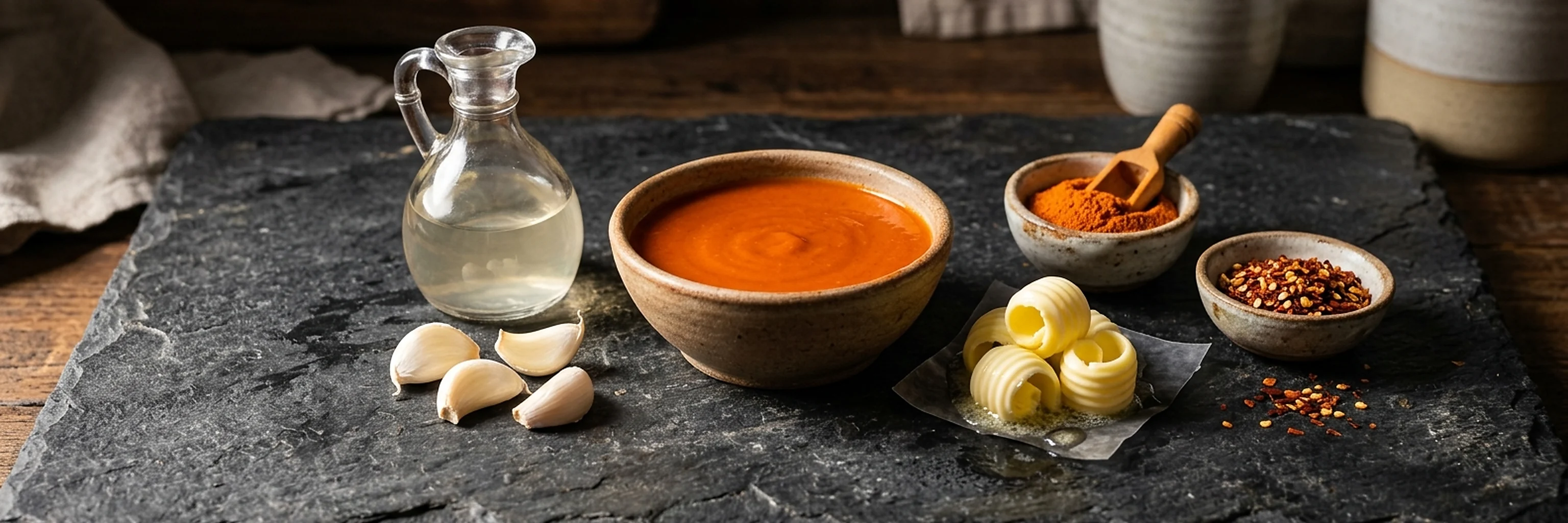
Quick Answer
How do you make pineapple buffalo sauce?Reduce 1/2 cup of pineapple juice (from crushed canned pineapple) until it's concentrated and slightly syrupy - about 5-6 minutes over medium heat. Add Frank's RedHot and bring to a simmer. Whisk in butter last. The reduction step is critical: unreduced pineapple juice makes the sauce too thin and the pineapple flavor too subtle. Reduced pineapple juice is concentrated tropical sweetness that stands up to the cayenne and vinegar in the hot sauce. The result is a sauce with bright tropical sweetness in the first second and buffalo heat in the finish - they don't blend into one note but alternate in interesting sequence.
Why Pineapple Works With Buffalo Sauce
Pineapple and hot sauce is a combination with deep roots in Hawaiian cuisine (pineapple on pizza aside) and throughout Southeast Asian cooking - think of the pineapple-chili preparations in Thai and Filipino food. The combination works chemically and flavor-wise:
- Bromelain tenderizes protein: Pineapple contains bromelain, a proteolytic enzyme that breaks down proteins. This makes pineapple buffalo sauce an especially effective marinade - the bromelain tenderizes chicken while the capsaicin penetrates. When used as a finishing sauce (added after cooking), bromelain has no tenderizing effect since it needs extended contact with raw protein.
- Sweetness counterpoints heat: Pineapple's natural sugars (fructose, glucose, sucrose) create the same sweet-heat balance that makes honey hot sauce popular, but with tropical fruit complexity instead of floral honey sweetness. The sweetness moderates the initial heat perception while the heat returns in the finish.
- Acid complements hot sauce: Pineapple is acidic (pH approximately 3.2-4.0), which aligns with the vinegar-forward character of cayenne-based hot sauces. The pineapple acid reinforces the tangy character rather than fighting it.
- Caramelization potential: Pineapple sugars caramelize beautifully at high temperatures. Pineapple buffalo sauce grilled on wings develops complex caramelized notes in the spots where the sauce chars - this is a flavor advantage over most other buffalo variations.
The combination is closer to the mango buffalo sauce approach than to the Thai buffalo sauce, though all three occupy the tropical-fruit-meets-hot-sauce territory.
Fresh vs. Canned Pineapple
Fresh vs. Canned Pineapple for Buffalo Sauce
| Attribute | Fresh Pineapple | Canned Crushed Pineapple |
|---|---|---|
| Flavor intensity | Bright, more complex | Slightly sweeter, cooked |
| Bromelain activity | High (active enzyme) | None (heat-destroyed in canning) |
| Juice availability | Must extract manually | Comes with built-in juice |
| Consistency | Varies by ripeness | Consistent sweetness |
| Convenience | More prep work | Ready to use |
| Best: Best for | Finishing sauce (most flavor) | Marinade or sauce (easier) |
For the sauce recipe: canned crushed pineapple (the pineapple + its juice) is the better choice because it provides a concentrated juice that reduces beautifully and has more consistent sweetness than fresh pineapple (which can range from tart to very sweet depending on ripeness). For a marinade where you want bromelain's tenderizing effect: use fresh pineapple juice (the enzyme is destroyed in canning).
Ingredients
- 1 can (8 oz) crushed pineapple in juice (not syrup) - use the pineapple AND the juice
- 1/2 cup Frank's RedHot Original
- 2.5 tablespoons unsalted butter
- 1 teaspoon fresh lime juice
- 1/4 teaspoon garlic powder
- 1/4 teaspoon red pepper flakes (optional, for extra heat)
- Pinch of salt
Method
- Add the entire can of crushed pineapple (pineapple + juice) to a small saucepan over medium heat.
- Simmer uncovered, stirring occasionally, for 5-6 minutes until the liquid is reduced by about half and the mixture is concentrated and slightly thick. The pineapple will become translucent and the juice will be syrupy.
- Add Frank's RedHot, garlic powder, and red pepper flakes if using. Stir to combine. Return to a simmer and cook 2 minutes.
- Add lime juice and salt. Taste - it should be sweet-tangy-hot with the pineapple character prominent but not overwhelming.
- Reduce heat to low. Add butter and whisk continuously until melted and emulsified - 2-3 minutes.
- Use immediately or refrigerate in a sealed jar up to 1 week. Shake or stir before using - the pineapple pieces settle.
Tips
- For a smoother sauce: use an immersion blender on the reduced pineapple before adding hot sauce and butter. This creates a uniform sauce without pineapple chunks. The chunky version is more textural and interesting on wings; the smooth version works better as a dipping sauce or for coating.
- If the sauce is too sweet for your taste: add 1/4 teaspoon of apple cider vinegar to sharpen it. The additional acid cuts the sweetness and balances the flavor.
- For a grilling variation: brush pineapple buffalo sauce on wings in the last 5 minutes of grilling. The sugars caramelize against the hot grill grates, creating a lacquered, slightly charred exterior that's exceptional.
The Char Potential
Pineapple buffalo sauce has the best caramelization of any buffalo sauce variation. The pineapple sugars (combined with the natural sugars in Frank's) burn beautifully against high heat without turning bitter the way pure-sugar sauces do. If you're grilling wings with this sauce: let the sauce hit the grill grate directly rather than just coating the wing. The spots where the sauce contacts the hot metal caramelize to nearly candy-like sweetness with a slight char. This is a feature, not a bug - it's one of the best textural and flavor experiences you can get from a buffalo sauce variation.
Best Uses for Pineapple Buffalo Sauce
The tropical-sweet character of pineapple buffalo sauce works best in specific contexts:
- Grilled chicken wings or thighs: The caramelization potential is highest on the grill. Apply in the last 5 minutes to prevent burning.
- Hawaiian-style poke bowls or rice bowls: Drizzle over seared chicken on a rice base - the pineapple buffalo sauce bridges the tropical rice bowl format and the buffalo flavor.
- Chicken skewers: Pineapple buffalo sauce + chicken pieces on a skewer, alternating with pineapple chunks, grilled together - a natural combination.
- Fish tacos (surprisingly): The sweet-spicy-tropical character of pineapple buffalo sauce works well on grilled fish tacos with slaw. The pineapple connects the tropical taco format to the hot sauce element.
- Avoid for traditional wings: Purists and people expecting classic buffalo wings will find pineapple buffalo sauce unexpected. Use it deliberately, not as a surprise swap for standard buffalo sauce.