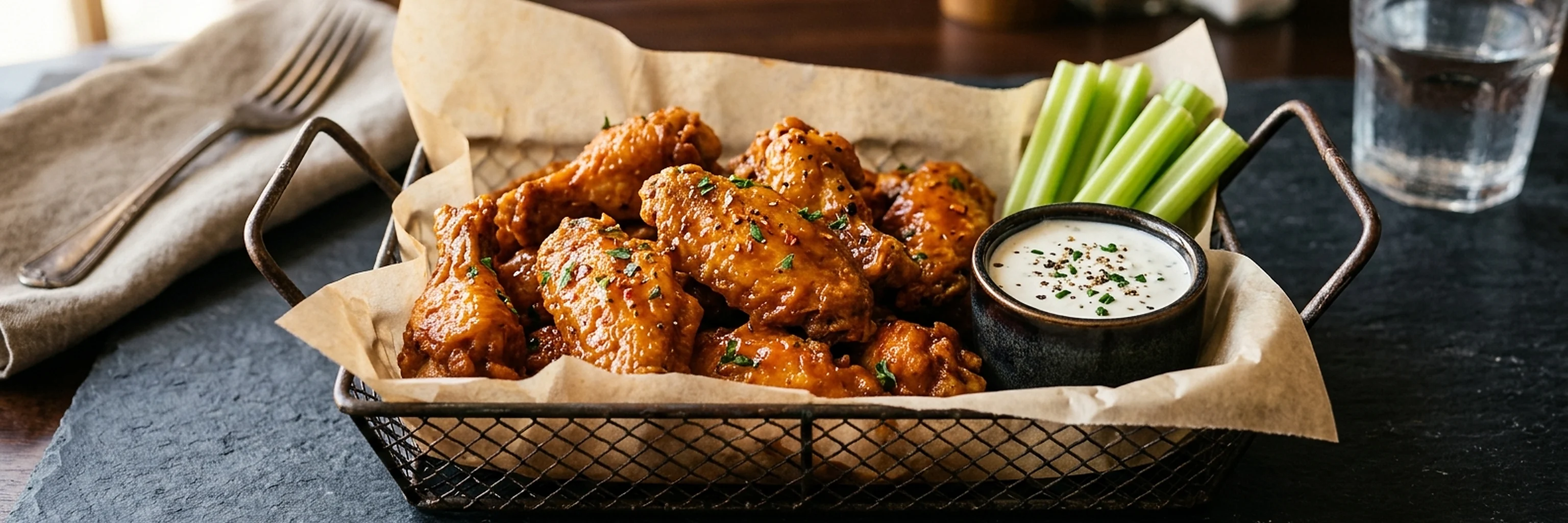
Quick Answer
How do you make smoked buffalo sauce?There are three approaches depending on equipment and time. The quickest: add 1/2 teaspoon smoked paprika per cup of finished buffalo sauce (5 minutes, works well). A better version: add 1/4 teaspoon liquid smoke (use Wright's or Colgin brand) to the hot sauce before emulsifying with butter (10 minutes, noticeably smoky). The full version: smoke whole cayenne or jalapeño peppers over hickory or applewood chips for 2 hours, then use them to make a smoked pepper mash hot sauce base. The smoked pepper method produces the most complex, authentic smoky character and pairs exceptionally well with the vinegar and butter of traditional buffalo sauce.
Why Smoke Works in Buffalo Sauce
Wood smoke contains hundreds of volatile compounds - phenols, carbonyls, and organic acids - that interact with food. In buffalo sauce, these compounds do several things:
- Add complexity to the heat: The phenolic compounds in smoke create an earthy, slightly bitter character that contrasts with capsaicin's clean burn. The result is layered heat rather than one-dimensional spice.
- Complement butter fat: Smoke compounds are often fat-soluble - they integrate well into butter-emulsified sauce and have a natural affinity with fat. Smoked salmon, smoked meats, smoked cheese - the pattern is consistent. Smoke in a butter-based sauce feels cohesive.
- Create char-adjacent flavor: Smoke suggests the flavors of grilled and charred food. Buffalo sauce with smoked character is a natural pairing for smoked or grilled chicken wings, pulled pork, and anything off a grill or smoker.
- Balance the vinegar sharpness: A small amount of smoke rounds the sharp edges of vinegar-heavy buffalo sauce. The smoke doesn't dull the tang - it moderates it, creating a more balanced overall flavor.
The Three Methods
Choose based on available equipment and time:
- Smoked paprika: 5 minutes, no special equipment. Good smoke character, limited complexity. Best for everyday smoked buffalo sauce without extra effort.
- Liquid smoke: 10 minutes, one bottle purchase. More authentic smoke character than paprika alone, easy to control intensity. Best middle-ground option.
- Full wood smoke (smoked pepper mash): 3+ hours, requires a smoker or grill. The most complex and authentic result. Worth it for dedicated batches or special occasions.
Method 2: Liquid Smoke Buffalo Sauce (Recommended Everyday Version)
Ingredients
- 1/2 cup Frank's RedHot (or Crystal Hot Sauce)
- 4 tablespoons unsalted butter, cold, cut into pieces
- 1/4 teaspoon liquid smoke (hickory flavor - see notes)
- 1/2 teaspoon smoked paprika
- 1/4 teaspoon garlic powder
- 1/4 teaspoon dark brown sugar or honey (optional, softens smoke intensity)
- Salt to taste
Method
- Add hot sauce, liquid smoke, smoked paprika, and garlic powder to a small saucepan.
- Warm over low heat until just steaming - do not boil. Stir to combine.
- Cut cold butter into 4-6 pieces. Add one piece at a time, whisking constantly until each piece is fully incorporated before adding the next.
- Once all butter is incorporated and sauce is cohesive and glossy, remove from heat.
- Add brown sugar or honey if desired - taste first, the smoke adds complexity that may not need sweetness.
- Taste and adjust: more liquid smoke in 1/8 teaspoon increments for stronger smoke; more hot sauce for heat.
Tips
- Liquid smoke brand matters: Wright's Liquid Smoke has a cleaner, more authentic character than Colgin. Use hickory for wings (classic pairing), applewood for pork applications.
- 1/4 teaspoon is a starting point - liquid smoke intensity varies by brand. Taste and add more in very small increments.
- This sauce is excellent on smoked chicken wings (double smoke), grilled ribs, and pulled pork sandwiches.
Method 1: Smoked Paprika Buffalo Sauce (Quickest Version)
Smoked paprika (pimentón) is made from red peppers that are cold-smoked over oak before drying and grinding. Spanish smoked paprika (La Vera designation) is the best quality - the smoke character is genuine rather than artificial.
For smoked paprika buffalo sauce: make standard buffalo sauce (1/2 cup hot sauce + 4 tablespoons butter), then add:
- 1/2 teaspoon sweet smoked paprika per cup of finished sauce (mild smoke, slightly sweet)
- Or 1/4 teaspoon hot smoked paprika (picante pimentón) for a spicier, more intense smoked character
Add the smoked paprika to the hot sauce before emulsifying with butter - this distributes it more evenly than adding at the end. Smoked paprika alone produces a moderate, slightly earthy smoke character that reads as "barbecue-adjacent" rather than "wood-smoked" - it's the most accessible approach and works in any kitchen without special ingredients.
Method 3: Full Smoked Pepper Mash (Most Complex)
This method produces the most authentic, complex smoked buffalo sauce. It requires a smoker or a grill with a lid and wood chips.
Step 1: Smoke the peppers
Use 1 pound of cayenne peppers (or a blend of cayenne and jalapeños for moderate heat). Set up smoker or kettle grill at 200-225°F with hickory or applewood chips. Place whole peppers directly on the grate. Smoke for 1.5-2 hours until peppers are softened, slightly blistered, and have taken on color from the smoke. They should not be fully dried - you want them softened and smoke-infused, not dehydrated.
Step 2: Make the smoked pepper mash
Transfer smoked peppers to a blender. Add 1 cup distilled white vinegar, 1 teaspoon kosher salt, and 1/2 teaspoon garlic powder. Blend until smooth. This is your smoked hot sauce base. Strain through a fine mesh strainer, pressing to extract maximum liquid. The result is approximately 1.5-2 cups of intensely flavored smoked pepper hot sauce.
Step 3: Emulsify into buffalo sauce
Use 1/2 cup of the smoked pepper mash as the hot sauce component in standard buffalo sauce. Emulsify with 4-5 tablespoons butter over low heat. The additional tablespoon of butter (compared to standard) is recommended because the fresh pepper mash has slightly different viscosity than bottled hot sauce, and the extra butter helps create a stable emulsion.
Method Comparison
Smoked Buffalo Sauce Methods
| Method | Time | Equipment | Smoke Authenticity | Best Application |
|---|---|---|---|---|
| Smoked paprika only | 5 min | None special | Mild, earthy | Quick weeknight sauce |
| Liquid smoke | 10 min | 1 bottle | Good - medium complexity | Everyday smoked buffalo |
| Best: Liquid smoke + smoked paprika | 10 min | 1 bottle | Very good | Best no-smoker option |
| Full smoked pepper mash | 3+ hours | Smoker or grill | Excellent - most complex | Special batches, competitions |
The Hickory vs. Applewood Difference
Hickory smoke is intense, slightly bacon-forward, and traditional for barbecue and wings. Applewood smoke is lighter, slightly sweet, and fruity - it produces a more delicate smoke character. For buffalo sauce specifically, the choice matters: hickory-smoked buffalo sauce pairs with the boldness of the cayenne-vinegar combination more naturally, creating a sauce that tastes purposefully smoky and aggressive. Applewood-smoked buffalo sauce is more refined and pairs better with sweeter proteins and more delicate applications. Most wing competitions and restaurants use hickory for smoked wing sauces. Try both and see which fits your application - there's no wrong answer.