Quick Answer
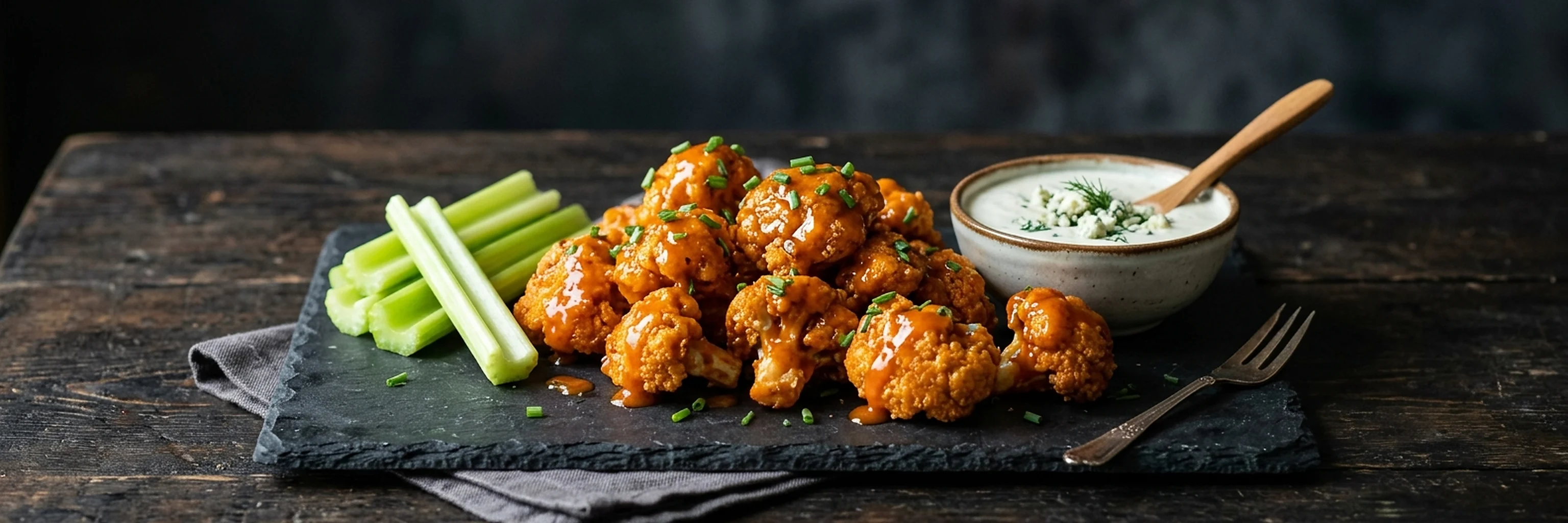
Can you put buffalo sauce on tofu?Yes - with proper preparation. The two requirements: (1) use extra-firm tofu, and (2) press it thoroughly to remove moisture before cooking. Tofu is approximately 80-85% water. Pressing for 30 minutes (or overnight in the refrigerator) removes enough moisture for the exterior to crisp when baked or fried. Coat pressed, cubed tofu in cornstarch before cooking - the starch creates a dry, crispy surface that holds buffalo sauce without immediately becoming soggy. After baking or air-frying until golden (400°F, 25-30 minutes), toss in vegan buffalo sauce while still warm. The crispy coating holds sauce far better than unpressed, uncoated tofu.
Which Tofu to Use
Not all tofu is appropriate for buffalo preparations. Tofu is classified by water content and resulting texture:
- Extra-firm tofu: The only appropriate choice for buffalo tofu. Extra-firm has the lowest water content of available commercial tofu and the highest protein density per unit volume. Even extra-firm requires pressing - its starting water content (~80%) is still too high for crisping without pressing.
- Firm tofu: Can work if pressed for longer (1-2 hours), but produces less crispy results than extra-firm. The higher water content means more time needed to remove enough moisture. Firm tofu will get some crispiness but is more difficult to work with than extra-firm.
- Silken tofu: Not appropriate for buffalo sauce applications. Silken tofu has the highest water content and custard-like texture - it falls apart when handled and cannot be crisped. It has its own culinary applications (desserts, smoothies, cream sauces) but buffalo tofu is not one of them.
- Super-firm tofu (sometimes labeled "high-protein" or "pressed"): The best choice if available. Some brands sell tofu that's been factory-pressed with much lower water content than standard extra-firm. This tofu requires less home pressing and crisps more easily.
The Pressing Step
Pressing is not optional for good buffalo tofu. The process:
- Remove tofu from the package and drain.
- Wrap in clean kitchen towels or paper towels - two or three layers.
- Place on a cutting board. Set a heavy object on top (a cast iron pan, a pile of books, a full water bottle). Press for at least 30 minutes at room temperature.
- For better results: press in the refrigerator overnight (8+ hours). The longer pressing and cold temperature remove significantly more moisture, and cold tofu also develops a slightly chewier, meatier texture.
After pressing, the tofu block should feel noticeably firmer and lighter. A well-pressed block releases 2-4 tablespoons of water. Pressing also makes the tofu easier to cut into uniform cubes that hold their shape during cooking.
Freezing as an Alternative to Pressing
Freeze extra-firm tofu in its package, then thaw before use. Freezing ice crystals expand and rupture tofu's water-filled cells, which allows water to drain much more rapidly when the tofu thaws. Frozen-and-thawed tofu has a chewier, spongier texture and absorbs sauces even more readily than pressed fresh tofu. This technique produces excellent buffalo tofu: the texture is meaty and the sauce absorption is notable. Cut thawed, pressed frozen tofu into cubes, coat in cornstarch, and proceed as with fresh pressed tofu. The "meatier" texture also makes it feel more satisfying as a wing alternative.
Getting Buffalo Tofu Crispy
The cornstarch coating is essential:
- After pressing, cut tofu into 1-inch cubes.
- Place in a bowl. Drizzle with 1 teaspoon neutral oil. Toss to coat.
- Sprinkle 2-3 tablespoons of cornstarch over the oiled cubes. Toss until each cube is lightly coated on all surfaces.
- Season with garlic powder and a pinch of salt.
- Bake, air-fry, or pan-fry until golden on the outside. Sauce after cooking.
The cornstarch creates a dry, starchy exterior. When it hits the heat of the oven or hot pan, the starch gelatinizes and forms a thin, crispy shell. This shell is what holds the buffalo sauce after cooking - without it, the sauce immediately soaks into the tofu surface and the result is wet, not sauced.
For vegan buffalo tofu: use the vegan buffalo sauce (plant-based butter instead of dairy butter).
Cooking Methods Compared
Buffalo Tofu Cooking Methods
| Method | Crispiness | Ease | Time | Notes |
|---|---|---|---|---|
| Best: Air fryer (400°F) | Excellent | Very easy | 20-25 min | Best crispiness, small batches |
| Oven (425°F, wire rack) | Very good | Easy | 30-35 min | Larger batches, flip halfway |
| Pan-fry (cast iron) | Excellent | Moderate | 15 min | Best color, requires attention |
| Deep fry (375°F) | Best | Requires oil management | 4-5 min | Restaurant-quality crunch |
| Oven without rack (sheet pan) | Good | Easy | 30-35 min | Bottom less crispy |