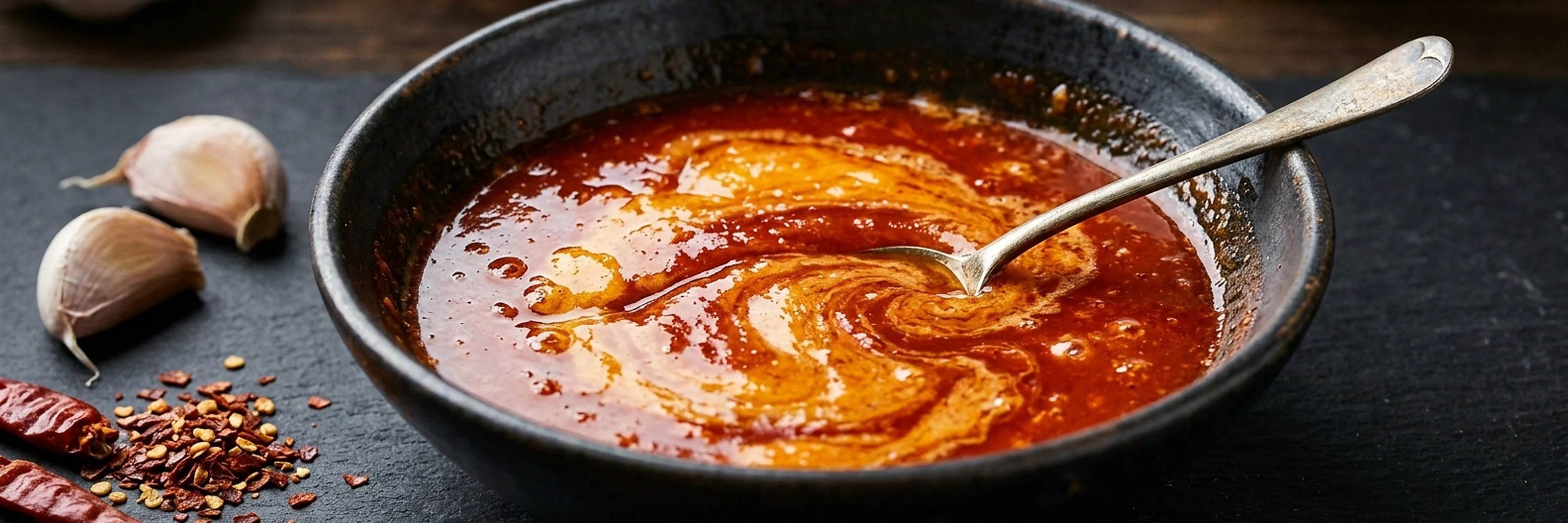
Quick Answer
What is the best fat for buffalo sauce?Unsalted butter is the best fat for traditional buffalo sauce - it's what gives the sauce its characteristic rich, slightly dairy flavor and creamy texture. Butter is an emulsion itself (water-in-fat), which makes it naturally easier to incorporate into hot sauce as a stable emulsion. Among oil alternatives: avocado oil is the best choice (high smoke point, neutral flavor, stable emulsion), followed by extra-virgin olive oil (adds flavor complexity) and melted coconut oil (neutral refined, slight coconut with virgin). Ghee is the closest flavor substitute to butter, producing nearly identical results. Whatever fat you use, the technique matters: add the fat to warm (not hot) sauce slowly, off-heat, while whisking constantly.
Why Buffalo Sauce Uses Butter
The original buffalo wing sauce recipe (attributed to Teressa Bellissimo at the Anchor Bar) used melted butter and Frank's RedHot in equal proportions. This wasn't arbitrary - butter has specific properties that make it the ideal fat for buffalo sauce:
- Dairy solids for flavor: Butter contains milk solids (casein proteins and lactose) alongside its fat content. These milk solids contribute the subtle dairy richness, slightly nutty flavor (more pronounced in browned butter), and savory depth that distinguishes buffalo sauce from plain oil + hot sauce. Pure oil has none of these flavor compounds.
- Water content for emulsification: Butter is approximately 16-18% water. This water content helps create the oil-in-water emulsion where butter fat droplets are suspended in the hot sauce's water phase. Pure oil (0% water) is harder to emulsify stably with hot sauce.
- Moderate fat content: At 80% fat, butter provides enough fat for full capsaicin binding (making the sauce feel rich and not harsh) without being as heavy as a pure oil preparation.
- Flavor at temperature: Butter melts and becomes fluid at approximately 90-98°F - slightly below body temperature. This means it coats the palate effectively at eating temperature. Pure oils are already fluid at room temperature; their coating behavior on the palate is different.
The complete homemade buffalo sauce guide explains the full recipe and technique.
The Emulsification Science
Buffalo sauce is an emulsion: fat (butter) dispersed in a water-based liquid (hot sauce). Emulsions can break (separate into fat and water phases) when temperature or agitation is wrong. The butter's milk proteins (caseins and whey proteins) serve as natural emulsifiers - they have both hydrophilic (water-loving) and lipophilic (fat-loving) parts of their molecular structure that help stabilize fat droplets in the water phase.
When you substitute pure oil for butter:
- You lose the emulsifying proteins from the milk solids
- The emulsion is more fragile and more prone to breaking
- The sauce often needs additional emulsifying technique (whisking more vigorously, lower heat)
- You lose the dairy flavor compounds
This is why buffalo sauce made with pure oil often separates or has a different texture than butter-based sauce - it lacks the natural emulsifiers that butter provides. See more on this in the buffalo sauce without butter guide.
Oil Alternatives Compared
Fat Alternatives for Buffalo Sauce
| Fat | Flavor Impact | Emulsion Stability | Smoke Point | Best For |
|---|---|---|---|---|
| Best: Unsalted butter | Rich, dairy, classic | Excellent (natural emulsifiers) | 300-350°F | Traditional recipe |
| Ghee (clarified butter) | Nuttier, more intense butter | Good (fewer proteins) | 450-485°F | Flavor similar to butter |
| Avocado oil | Neutral to mild | Moderate (needs extra technique) | 520°F | Vegan, neutral flavor |
| Extra virgin olive oil | Fruity, slightly bitter | Moderate | 375°F | Mediterranean character |
| Refined coconut oil | Neutral | Moderate | 450°F | Neutral vegan option |
| Virgin coconut oil | Slight coconut | Moderate | 350°F | Tropical buffalo variations |
| Vegan butter | Close to butter | Good | 350-400°F | Dairy-free closest match |
Ghee (Best Butter Substitute)
Ghee is clarified butter - butter with the milk solids and water removed. The resulting pure fat has a higher smoke point and longer shelf life than butter, with a nuttier, more concentrated butter flavor. In buffalo sauce, ghee produces a sauce with very similar character to butter but with slightly less emulsion stability (the milk proteins that aided emulsification are removed). Technique adjustment: whisk more vigorously and use lower heat when adding ghee to hot sauce.
Avocado Oil (Best Neutral Vegan Option)
Avocado oil has a very mild flavor that doesn't compete with the hot sauce's character. Its high oleic acid content (similar to olive oil) means it stays fluid at refrigerator temperature, unlike coconut oil which solidifies. The emulsion with avocado oil requires more technique - add in a thin stream while whisking continuously, and work at low heat rather than building to a simmer.
Vegan Butter (Closest Drop-In Replacement)
Plant-based butters (Earth Balance, Country Crock Plant Butter, Miyoko's) are formulated to behave like dairy butter in cooking. They contain emulsifiers and water content that mimics butter's emulsification behavior. These are the closest drop-in replacement for dairy butter in buffalo sauce - the flavor is slightly different (less dairy richness) but the technique is identical and the result is similar. Best option for dairy-free buffalo sauce. See the complete vegan buffalo sauce guide.
Why Oil + Hot Sauce ≠ Buffalo Sauce
Pure oil mixed with hot sauce produces a condiment, but not buffalo sauce in the traditional sense. The reason: without butter's milk solids, you lose two critical components - the natural emulsifiers (milk proteins) that create a stable suspension, and the dairy flavor compounds (diacetyl, butyric acid, lactones) that contribute to buffalo sauce's characteristic richness. A sauce made from 1/2 cup Frank's + 3 tablespoons avocado oil whisked together will separate quickly, have a thinner mouthfeel, and lack the creamy richness. This is why restaurants that want to offer vegan buffalo sauce can't just swap oil for butter - they need to use vegan butter or add another emulsifier.