Quick Answer
What's the difference between buffalo sauce and hot sauce?Hot sauce is a liquid condiment made from peppers, vinegar, and salt. Buffalo sauce is an emulsified sauce made from hot sauce plus butter (and usually garlic powder and Worcestershire). The butter changes everything: it adds fat, richness, and creaminess that hot sauce doesn't have. Buffalo sauce coats food - hot sauce drizzles over it. Buffalo sauce is mild to medium heat; hot sauce can range from mild to extremely hot. You make buffalo sauce from hot sauce, but the two products behave very differently in cooking.
The confusion between buffalo sauce and hot sauce is understandable - buffalo sauce is made with hot sauce, which makes people assume they're interchangeable. They're not. Substituting one for the other in a recipe produces noticeably different results: different heat levels, different textures, different behavior in cooking, and a different flavor profile that ranges from "not quite right" to completely wrong for the application.
This guide breaks down exactly what separates them - by ingredient, by chemistry, and by use case - so you know when Frank's RedHot Original is the right call and when it needs to be turned into a full homemade buffalo sauce before it can do the job.
What Each One Is, Precisely
Hot Sauce
Hot sauce, at its core, is a liquid pepper condiment made from chile peppers, vinegar, and salt - fermented or unfermented, processed or raw. The defining characteristics are: it's thin, it's acidic, it's water-based, and its primary purpose is adding heat and brightness. Frank's RedHot Original is a hot sauce. So is Tabasco, Crystal, Cholula, and Louisiana Brand.
Hot sauces vary enormously in heat level (measured in Scoville Heat Units), flavor profile (vinegar-forward, smoke-forward, fruit-forward), and thickness. They're designed to be drizzled, dashed, or poured - not to coat food as a finished sauce.
Buffalo Sauce
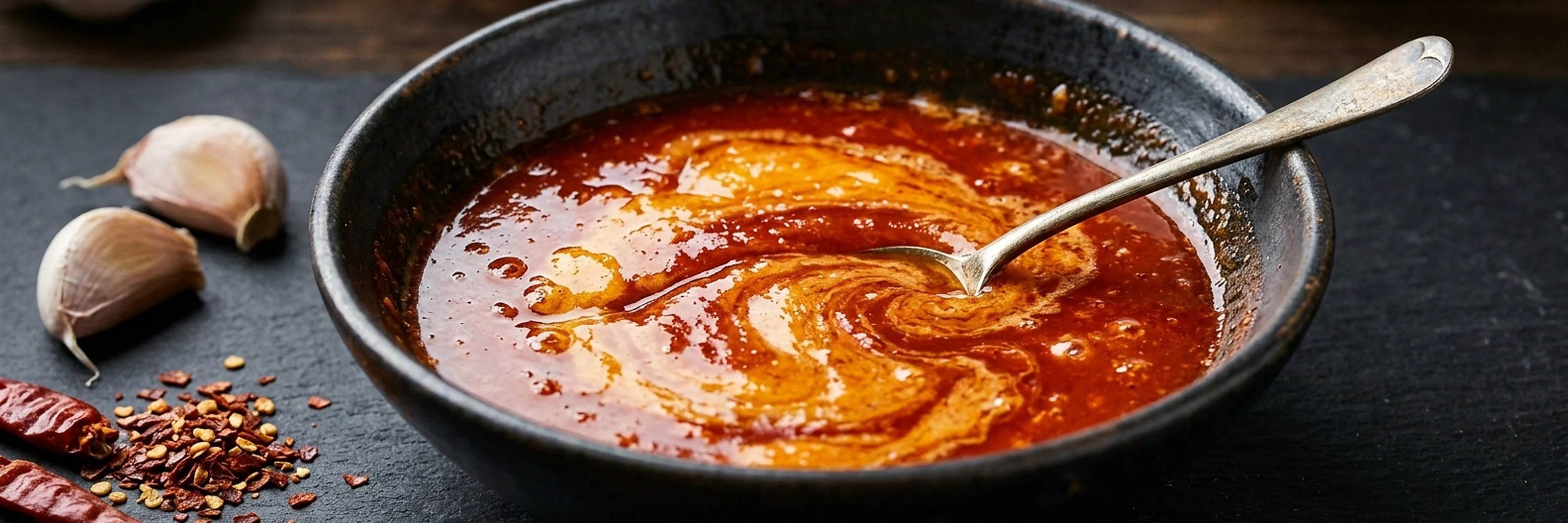
Buffalo sauce is a cooked, emulsified sauce that uses hot sauce as its primary flavoring but is fundamentally different in composition. The standard formula - which originated at the Anchor Bar in Buffalo, NY in 1964 - combines vinegar-based cayenne hot sauce with melted butter, whisked together until emulsified into a smooth, creamy, coating sauce.
Buffalo sauce is fat-based. It has richness, viscosity, and a coating texture that hot sauce doesn't. It's designed to adhere to food - specifically chicken wings - and stay there. The heat level is typically lower than a straight hot sauce because the butter dilutes the capsaicin.
Side-by-Side Comparison
Buffalo Sauce vs Hot Sauce - Key Differences
| Property | Hot Sauce | Buffalo Sauce |
|---|---|---|
| Base | Water / vinegar | Hot sauce + butter (fat-based emulsion) |
| Texture | Thin, liquid | Creamy, glossy, coating |
| Fat content | 0g per serving | 3-5g fat per tablespoon |
| Heat level | Varies (mild to extreme) | Mild to medium (butter dilutes heat) |
| Flavor | Pepper, vinegar, salt | Tangy, rich, buttery, complex |
| Cooking use | Drizzle / condiment | Toss sauce / cooking sauce |
| Wings? | Too thin, doesn't coat | Designed for this application |
| Dipping? | Yes (as condiment) | Yes (thicker, richer) |
Ingredient Differences
The ingredient list tells the whole story. A typical hot sauce (Frank's RedHot Original) contains: distilled vinegar, aged cayenne red peppers, water, salt, garlic powder. Five ingredients. Almost no fat.
A classic buffalo sauce recipe adds butter to that foundation. The butter contains: milk fat, water, milk solids, trace amounts of lecithin (a natural emulsifier). When you whisk butter into hot sauce over low heat, the lecithin and milk solids bond the fat molecules with the water molecules from the vinegar, creating a stable emulsion. The result is a completely different physical substance from the hot sauce you started with.
The Emulsification Difference
This is why you can't just pour hot sauce on wings and call it buffalo. Hot sauce is a thin water-based liquid that slides off meat. Buffalo sauce is an oil-in-water emulsion with fat molecules distributed throughout. The fat creates viscosity, the emulsion creates gloss, and the combination produces the coating texture that makes wings work. Drizzle Frank's RedHot on a wing and it's a hot wing. Toss that same wing in 2:1 Frank's-and-butter and it's a buffalo wing. The chemistry is different.
How They Taste Different
On the palate, hot sauce and buffalo sauce share the vinegar-and-pepper baseline but diverge significantly beyond that:
Hot Sauce Flavor Profile
Immediate, sharp, high-contrast. The vinegar hits first, then the pepper heat, then a clean finish. There's no fat to carry flavor through the bite - the sensation is bright and then gone. Heat lingers on the tongue and back of the throat. Frank's RedHot Original is mild-medium on the hot sauce scale (450 SHU); other hot sauces can range from mild (Cholula at ~1,000 SHU) to extreme (Tabasco Scorpion at 2 million+ SHU).
Buffalo Sauce Flavor Profile
Rounded, creamy, complex. The butter carries the flavor through a longer finish, the fat coats the palate and slows the heat absorption, and the Worcestershire adds an umami depth that hot sauce alone doesn't have. The heat is more gradual - it builds over the meal rather than hitting immediately. Buffalo sauce made from Frank's RedHot lands at mild-medium regardless of which hot sauce you use, because the butter dilutes the capsaicin concentration.
This is why the best store-bought buffalo sauces often taste quite different from the hot sauce they're built on - the added ingredients transform the flavor profile entirely.
When to Use Each
Use Hot Sauce When:
- You want a condiment to drizzle directly on finished food (tacos, eggs, pizza)
- You're adding heat to a recipe during cooking where fat would separate (marinades, soups, braises)
- You want intense heat without richness
- You're making a spicy vinaigrette or dipping sauce where fat content should come from olive oil instead of butter
- You're building a buffalo sauce from scratch (start with hot sauce, add butter)
Use Buffalo Sauce When:
- You're tossing wings, tenders, or cauliflower (anything that needs a coating sauce)
- You're making buffalo chicken dip - the fat content is essential for the texture
- You want a drizzle sauce that's richer and more substantial than plain hot sauce
- You're finishing a sauce or glaze where richness is the goal
- You're making something where "heat plus butter" is the flavor profile you want
The Quick Test
Not sure which one a recipe needs? Ask: does this need to coat food as a finished sauce, or add heat during cooking? If coating: buffalo sauce. If heat-during-cooking: hot sauce. This distinction applies to nearly every recipe where you'd reach for either product.