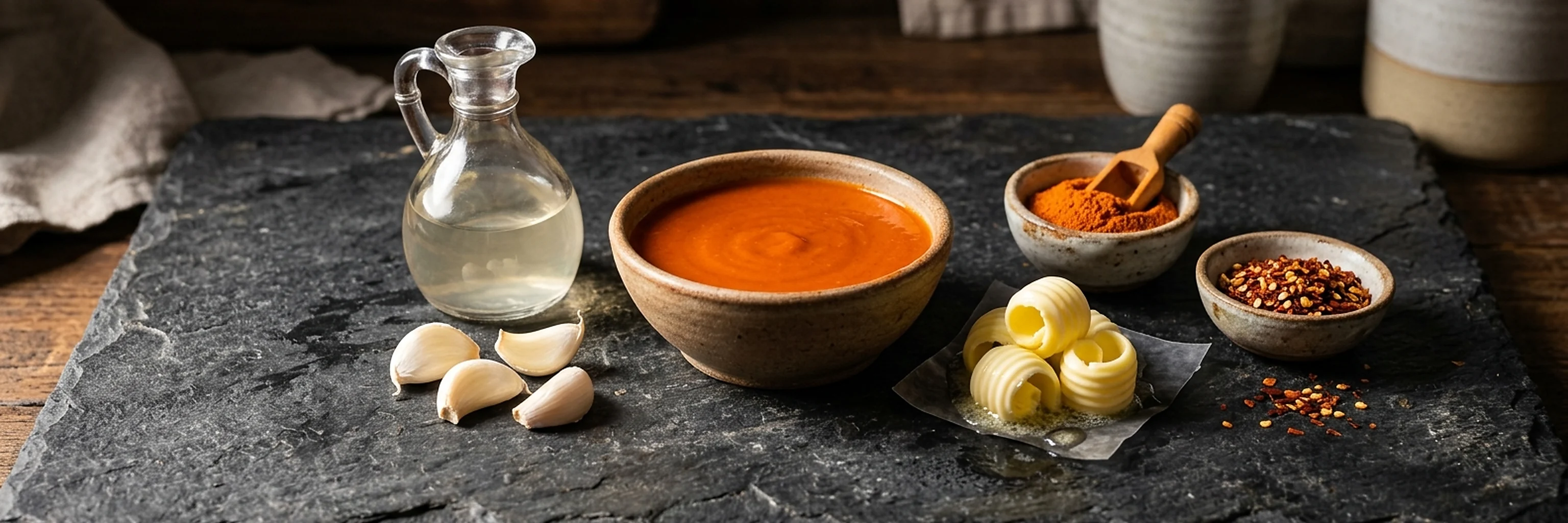
Quick Answer
What is the Scoville rating of cayenne pepper?Cayenne pepper registers approximately 30,000-50,000 Scoville Heat Units (SHU) - significantly hotter than jalapeño (2,500-8,000 SHU) but much milder than habanero (100,000-350,000 SHU). In the context of buffalo sauce: cayenne pepper is the base pepper in Frank's RedHot and most traditional hot sauces, but the vinegar and processing dilute the final sauce to approximately 450 SHU. The cayenne's heat is present but moderated dramatically by the vinegar concentration and the dilution process.
What Is Cayenne Pepper?
Cayenne pepper (Capsicum annuum var. longum) is a long, thin, red pepper typically measuring 2-5 inches in length with a pointed tip. It's a member of the nightshade family, related to bell peppers, jalapeños, and habaneros - all Capsicum species.
Cayenne is one of the most commercially significant peppers globally: it's the base ingredient for the vast majority of mainstream commercial hot sauces, including Frank's RedHot (the foundation of classic buffalo sauce), Tabasco's cayenne products, and countless others. Its particular combination of moderate-to-high heat, clean flavor, and high yield makes it ideal for commercial hot sauce production.
The name "cayenne" comes from the city of Cayenne in French Guiana, where the pepper was historically cultivated for export to Europe. Today, major cayenne production occurs in India, Ethiopia, the United States (particularly Louisiana and New Mexico), China, and Mexico.
Scoville Heat Level
Cayenne peppers measure approximately 30,000-50,000 SHU, though specific cultivars and growing conditions produce significant variation:
Cayenne Pepper Scoville Range in Context
| Pepper | SHU Range | Context |
|---|---|---|
| Bell pepper | 0 SHU | No heat, zero capsaicin |
| Banana pepper | 100-500 SHU | Mild |
| Jalapeño | 2,500-8,000 SHU | Moderate - familiar reference point |
| Best: Cayenne pepper | 30,000-50,000 SHU | Moderately hot - 4-6x hotter than jalapeño |
| Habanero | 100,000-350,000 SHU | Hot - 3-7x hotter than cayenne |
| Ghost pepper | 800,000-1,000,000 SHU | Extremely hot - 20x hotter than cayenne |
The raw cayenne SHU is only relevant to fresh or dried cayenne. In hot sauce applications, the vinegar dilution reduces perceived heat dramatically. Frank's RedHot - made primarily from cayenne - registers approximately 450 SHU in the finished bottle.
Cayenne's Flavor Profile
Cayenne is notable for what it doesn't have as much as what it does:
- Clean heat: Cayenne's heat builds steadily and disperses relatively quickly. It doesn't have the prolonged, lingering burn of habanero (which contains different capsaicinoids). This makes it ideal for food applications where you want heat without extended suffering.
- Minimal fruit character: Unlike habaneros (tropical, fruity) or chipotles (smoky), cayenne's flavor is relatively neutral - bright, slightly vegetal, with the pepper flavor itself secondary to the heat.
- High acidity compatibility: Cayenne pairs exceptionally well with vinegar - the two flavors amplify each other in hot sauce applications. The pepper's slight sweetness balances the vinegar's sharpness.
- Red pigment: Cayenne contains the same carotenoid pigments (capsanthin, capsorubin) that give all red peppers their color. These orange-red pigments are what give Frank's RedHot and traditional buffalo sauce their characteristic orange hue.
Cayenne and Buffalo Sauce: The Connection
The original buffalo sauce is essentially cayenne hot sauce + butter. Understanding cayenne explains the flavor science of buffalo sauce:
- Why cayenne specifically: The clean, relatively neutral cayenne flavor doesn't compete with the vinegar, butter, or garlic in buffalo sauce. A habanero-based hot sauce would add tropical fruit notes that clash; a chipotle would add smoke that might overwhelm. Cayenne is the right base because it contributes heat without dominating the flavor profile.
- Why the sauce is orange: Cayenne's carotenoid pigments dissolve in the butter fat of buffalo sauce, producing the characteristic orange color. More butter = slightly more orange; less butter = more red.
- Why it works with dairy: Cayenne's capsaicin is fat-soluble. When you dip buffalo wings in blue cheese or ranch, the dairy fat actively dissolves and carries away capsaicin from your taste receptors - which is why dairy genuinely cools the heat rather than just diluting it with water.
Cayenne Forms and Their Applications
Cayenne Forms: Uses and Heat Comparison
| Form | SHU | Best Use | Notes |
|---|---|---|---|
| Fresh cayenne | 30,000-50,000 | Salsas, raw preparations | Difficult to find outside specialty stores |
| Dried whole cayenne | 30,000-50,000 | Infusions, grinding to powder | Easy to store and grind as needed |
| Cayenne powder | 30,000-50,000 | Dry rubs, adding heat to recipes | Most common form in grocery stores |
| Best: Cayenne hot sauce (e.g. Frank's) | ~450 SHU finished | Direct use in buffalo sauce | Vinegar dilution reduces heat significantly |
| Aged cayenne paste | Variable | Commercial hot sauce production | More concentrated, used in manufacturing |
Making Buffalo Sauce From Scratch with Cayenne
To make buffalo sauce from scratch (without Frank's), dried cayenne pepper is the key ingredient. For a homemade cayenne hot sauce: simmer dried cayenne peppers with distilled white vinegar, salt, and garlic. Blend smooth, strain through a fine mesh sieve. The result is a functional hot sauce base for buffalo sauce that's close to Frank's in flavor profile. Use 1 tablespoon cayenne powder per 1 cup vinegar as a rough starting point.