Quick Answer
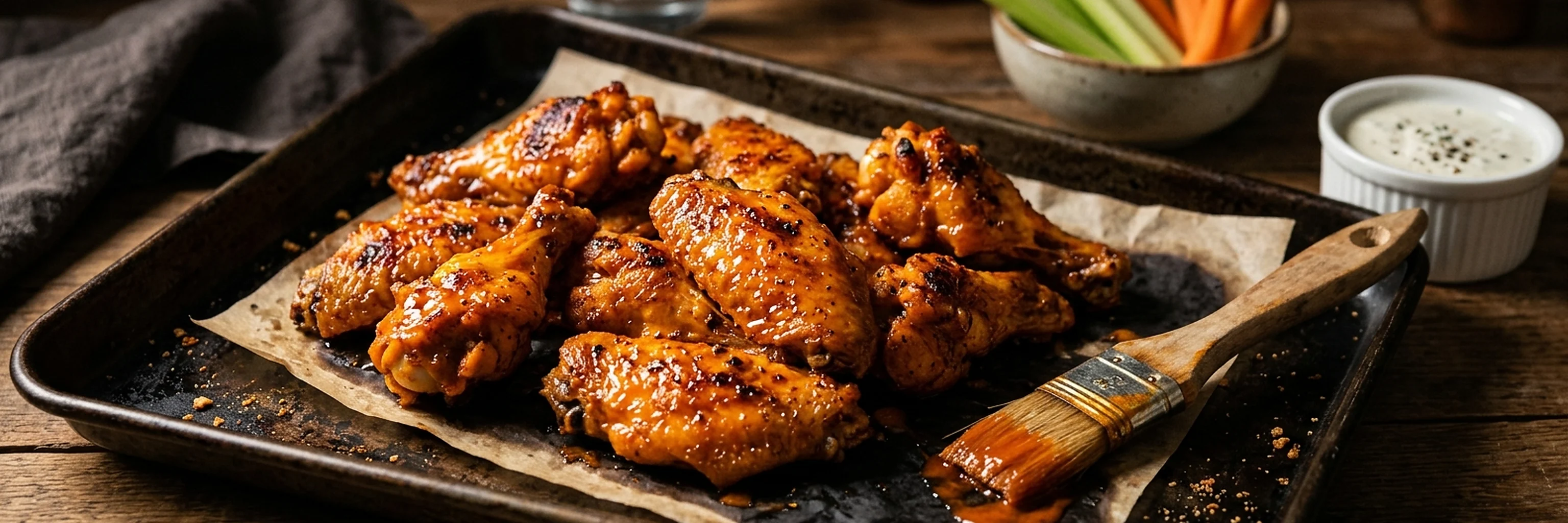
How do you make crispy air fryer buffalo wings?Pat wings completely dry with paper towels. Season with salt and baking powder (1 tsp per pound - not baking soda). Air fry at 380°F for 24 minutes, flipping at the 12-minute mark. Raise to 400°F for a final 4-5 minutes to crisp the skin. Toss in fresh-made buffalo sauce immediately. The baking powder is the key - it raises the pH of the skin, which accelerates browning and produces a crispier crust without any added oil.
Air fryer buffalo wings can be legitimately excellent - crispy enough to satisfy the same craving as deep-fried wings, faster than oven-baking, and with less mess than stovetop frying. But a lot of air fryer wing recipes produce disappointingly soft skin or, worse, wings that come out crispy but then go soggy after saucing.
Both problems are solvable with the right technique. This guide covers the prep step that produces genuinely crispy skin (it's not just "pat dry"), the temperature and timing that works reliably regardless of air fryer model, and how to sauce the wings so they stay crispy instead of steaming themselves soggy. For the sauce itself - including how to make it and why it emulsifies the way it does - the full homemade buffalo sauce guide has everything.
Air Fryer Buffalo Wings Recipe
Ingredients
- 2 lbs chicken wings (drumettes and flats, separated)
- 1 teaspoon baking powder (NOT baking soda)
- 1 teaspoon kosher salt
- 1/2 teaspoon garlic powder
- 1/2 teaspoon black pepper
- Buffalo sauce for tossing (recipe below)
- Buffalo Sauce:
- 1/2 cup Frank's RedHot Original
- 4 tablespoons unsalted butter
- 1/2 tsp garlic powder
- 1/2 tsp Worcestershire sauce
Method
- Pat wings completely dry with paper towels - every surface, including underneath where the meat folds. Moisture is the enemy of crispy skin.
- Mix baking powder, salt, garlic powder, and black pepper in a small bowl. Toss wings in this mixture until evenly coated on all sides.
- Arrange wings on a wire rack in a single layer, uncovered, in the refrigerator for 1 hour minimum (overnight is better). This dry brine step is optional but produces significantly crispier skin.
- Preheat air fryer to 380°F (193°C). Arrange wings in the basket in a single layer with space between each wing. Work in batches if needed - don't stack.
- Cook at 380°F for 12 minutes. Flip each wing. Cook for another 12 minutes.
- Raise temperature to 400°F. Cook for a final 4-5 minutes until the skin is golden-brown and audibly crispy.
- While wings cook, make the buffalo sauce: melt butter over low heat, remove from heat, whisk in hot sauce, add garlic powder and Worcestershire.
- Immediately toss wings with buffalo sauce in a large bowl. Toss until fully coated. Serve immediately.
Tips
- Baking powder, not baking soda - baking soda is too alkaline and makes wings taste soapy.
- Don't skip the dry brine. Even 1 hour makes a noticeable difference. Overnight is best.
- If your air fryer runs hot, reduce the initial temperature to 370°F and extend cooking time by 3 minutes.
- Wings are done when internal temperature reaches 165°F and the skin is golden-brown.
Getting Crispy Skin - The Science
Most air fryer wing recipes just say "pat dry" - and while that's correct, it doesn't explain the most important technique: the baking powder treatment.
Why Baking Powder Crisps Skin
Baking powder is a mixture of baking soda (alkaline) and cream of tartar (acidic). When applied to chicken skin, the alkaline component raises the surface pH, which changes the Maillard reaction - the chemical browning process - to happen faster and at lower temperatures. The result is more thorough browning and a crispier crust. The cream of tartar provides additional crispness by reacting with skin moisture. This is the same chemistry professional restaurants use for extra-crispy fried chicken.
The dry brine period (refrigerating the seasoned wings uncovered) serves a separate purpose: the salt draws out moisture from the skin via osmosis, that moisture evaporates in the fridge's dry environment, and you end up with drier skin before cooking begins. Drier skin = crispier cooked skin. It's the same principle as air-drying a peking duck - the skin crisps dramatically better when it's had time to dry out first.
The two-temperature cooking method (380°F first, then 400°F for the final blast) is also intentional. The lower temperature cooks the meat through without burning the skin. The higher-temperature final stage crisps and colors the skin once the meat is already cooked. If you start at 400°F, the skin can get too dark before the meat is cooked through.
Buffalo Sauce for Air Fryer Wings
The sauce you toss air fryer wings in needs to behave differently than sauce for deep-fried wings. Deep-fried wings are coated with a thin shell of fried batter that protects the skin during saucing. Air fryer wings have a dryer, more delicate crispy skin that can go soggy if the sauce is too thin or applied too aggressively.
The Two Rules for Saucing Air Fryer Wings
- Toss immediately, serve immediately. The longer sauced wings sit, the more steam rises from the hot meat through the skin, softening the crispness from the inside. Toss and serve within five minutes.
- Use a properly emulsified sauce. A sauce that's broken (separated into hot sauce and butter pools) is thinner and wetter than an emulsified sauce. That extra liquid penetrates the skin faster and causes sogginess. Make sure your buffalo sauce is smooth and glossy before tossing. See the buffalo sauce recipe for the full method and technique.
Sauce Application Method
Transfer hot wings to a large metal or ceramic bowl (not plastic - the hot wings and sauce will deform it). Pour sauce over wings all at once, then toss with tongs for 30 seconds. The bowl lets you toss efficiently without the wings spilling. Plate immediately and don't cover - a lid traps steam and softens the skin within minutes.
Temperature and Timing by Air Fryer Type
Air fryers vary significantly in how they heat. Basket-style fryers (Cosori, Instant Vortex) run hotter than toaster-oven-style fryers (Breville Smart Oven Air). The timing in the recipe above is calibrated for a standard basket-style air fryer. Here's how to adjust:
- Basket-style fryers (Cosori, Instant Pot Vortex, Ninja AF): Use the recipe times as written.
- Toaster-oven-style fryers (Breville, Cuisinart): Add 5-6 minutes to the initial cooking time. The larger cavity means less concentrated heat.
- Compact fryers (smaller than 3.5 qt): Reduce to batches of 10-12 pieces max. Overcrowding drops internal air temperature and produces steamed, not fried, results.
Always use a meat thermometer for confirmation. Wings are safe to eat at 165°F internal temperature. For the best texture, aim for 170-175°F - the slightly higher temperature renders more fat from under the skin, which paradoxically makes the skin crispier.
Frozen Wings vs Fresh
Frozen wings work in the air fryer with one important adjustment: never try to skip the thawing step. Wings cooked from frozen spend the first 10-15 minutes of cooking time thawing rather than cooking, which means the skin gets steamed before it has a chance to dry out and crisp. The result is soft, not crispy.
The correct method for frozen wings: thaw overnight in the refrigerator, pat completely dry, and proceed with the recipe. For a genuinely faster alternative to oven-baking, oven buffalo wings handle frozen-then-thawed wings equally well if you prefer that cooking method.
If you're caught with frozen wings and no time to thaw: cook at 360°F for 12 minutes to thaw, then drain any liquid from the basket, pat the wings dry, return to the fryer, and proceed with the standard recipe. They won't be as crispy as fresh or properly thawed wings, but they'll be acceptable.