Quick Answer
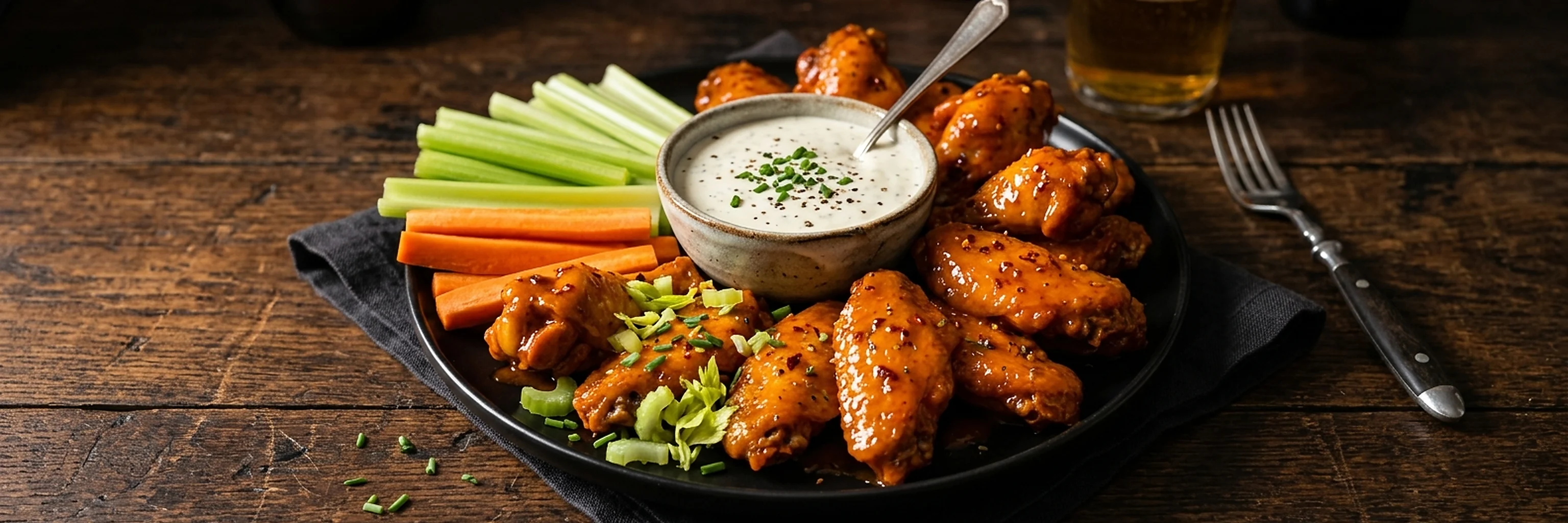
How do you make boneless buffalo wings crispy?Double-dredge is the key: (1) season the chicken pieces, (2) coat in seasoned flour, (3) dip in buttermilk, (4) coat in seasoned flour again. Fry at 350°F until golden brown and internal temp reaches 165°F. The double-dredge creates a thicker, crunchier crust than a single dip and keeps the crust from separating from the meat when tossed in sauce. Fry in batches - overcrowding drops oil temperature and produces soggy results.
"Boneless wings" is a useful bit of marketing: they're not wings at all but breaded and fried chicken breast pieces. The name works commercially because they deliver a similar eating experience - sauced, hand-held, bite-sized - without the effort of navigating bones. Done correctly, they're excellent. Done incorrectly (single-dredge batter, wrong oil temperature, sauced too soon), they're the disappointingly soft, sauce-soaked items that give the category a bad reputation.
This guide treats boneless wings as what they actually are: breaded chicken pieces that need proper breading, proper frying, and proper saucing technique. The buffalo sauce itself is the same as for bone-in wings - the differences are entirely in the preparation of the chicken.
What Boneless Wings Are (and What They're Not)
The term "boneless wings" is disputed in food culture. Traditional wing purists argue they shouldn't be called wings at all. Practically, the term has stuck and is widely understood to mean breaded, fried chicken breast pieces served in the same format as wings - sauced and served in portions.
The key difference from bone-in wings is the meat structure: chicken breast is leaner and denser than wing meat. This means boneless wings cook faster (thinner pieces reach temperature more quickly), but also dry out faster if overcooked. The breading protects the meat from direct heat and retains moisture during frying - which is why the breading quality matters much more for boneless wings than for skin-on bone-in wings.
Boneless Buffalo Wings Recipe
Ingredients
- 1.5 lbs boneless, skinless chicken breast, cut into 1.5-inch pieces
- Seasoning:
- 1 teaspoon kosher salt
- 1/2 teaspoon black pepper
- 1/2 teaspoon garlic powder
- 1/2 teaspoon smoked paprika
- Breading (Double-Dredge Method):
- 1.5 cups all-purpose flour
- 1 teaspoon baking powder
- 1 teaspoon garlic powder
- 1 teaspoon onion powder
- 1 teaspoon kosher salt
- 1/2 teaspoon cayenne pepper
- 1 cup buttermilk
- 1 egg, beaten into the buttermilk
- For frying:
- Canola or peanut oil (enough for 2-3 inches depth in your pot or pan)
- Buffalo Sauce:
- 1/2 cup Frank's RedHot Original
- 4 tablespoons unsalted butter
Method
- Cut chicken into 1.5-inch pieces. Season with salt, pepper, garlic powder, and paprika. Toss to coat.
- Set up the dredging station: (1) seasoned flour in a shallow bowl, (2) buttermilk + egg mixture in a second bowl.
- Dredge chicken pieces in flour first, shake off excess. Dip in buttermilk mixture. Return to flour and coat again firmly - press the flour on. Set aside on a wire rack for 10 minutes. The 10-minute rest lets the breading hydrate and adhere.
- Heat oil to 350°F in a heavy-bottomed pot or Dutch oven. Use a thermometer - oil temperature is the most important variable.
- Fry in batches of 6-8 pieces maximum. Overcrowding drops the oil temperature and produces soggy breading. Cook 4-5 minutes, turning once, until deep golden brown.
- Transfer to a wire rack (not paper towels - the rack keeps the bottom crispy). The internal temperature should reach 165°F.
- While chicken fries, make buffalo sauce: warm Frank's, remove from heat, whisk in cold butter until emulsified.
- Toss fried pieces in buffalo sauce and serve immediately.
Tips
- Chill the floured, pre-fried pieces in the refrigerator for 30 minutes before frying for extra crust adhesion.
- Use a deep-fry or candy thermometer - maintaining 350°F throughout frying is the difference between crispy and greasy.
- If you don't have buttermilk: 1 cup whole milk + 1 tablespoon white vinegar, mixed and rested 5 minutes, is an acceptable substitute.
Batter Science: Why Double-Dredge Works
The double-dredge technique (flour → buttermilk → flour) creates a crust with significantly better structural integrity than a single coating. Here's why:
The first flour coat creates a dry base layer that adheres directly to the seasoned chicken. When this is dipped in buttermilk, the buttermilk-flour interface creates a sticky paste. The second flour coat bonds to this paste, creating a substantially thicker, more integrated crust. When fried, the crust doesn't peel away from the chicken when tossed in sauce because the two layers bind together and to the meat.
The baking powder in the flour adds two things: it contributes to browning (same mechanism as on bone-in wings) and it releases CO₂ during frying, creating tiny bubbles in the crust that produce a lighter, crispier texture than plain flour.
The 10-minute rest after double-dredging allows the outer flour coating to absorb moisture from the buttermilk layer beneath, which helps it stay in place during frying rather than falling off in the oil.
Why Oil Temperature Matters
At 350°F, the breading sets rapidly, sealing the outside before the oil can penetrate. Steam from the chicken's moisture exits through the crust, keeping the interior moist while the exterior crisps. At below 325°F, oil penetration begins before the crust sets - the result is greasy, heavy breading and soggy texture. At above 375°F, the outside browns before the inside cooks through, leaving raw chicken under a dark crust. 350°F is the precision target for boneless wings.
Oil Temperature Management
Maintaining 350°F throughout frying requires active management:
- Let oil return to 350°F between batches. Adding cold chicken drops the temperature significantly - adding one large batch could drop it to 300°F, which produces greasy results.
- Use a heavy pot (cast iron, Dutch oven) - more mass means more temperature stability when cold chicken is added.
- Fry in small batches even if it takes longer - 6-8 pieces maximum per batch for a 3-quart pot.
- Clip a thermometer to the side of the pot and monitor it rather than guessing by appearance.
Baked Alternative (Air Fryer or Oven)
True boneless wings require deep frying for the best texture - the crust simply doesn't achieve the same crunch in an oven. However, a baked version with modified technique comes reasonably close.
For oven baking: After the double-dredge, spray the breaded pieces thoroughly with cooking spray (or brush lightly with canola oil). Arrange on a wire rack over a baking sheet. Bake at 400°F for 20-25 minutes, flipping halfway. The crust will be crispier than plain baking because of the oil spray, but softer and less crunchy than deep-fried.
Air fryer: Spray with cooking spray, air fry at 400°F for 12-15 minutes, flipping once. The air fryer produces the closest result to deep-frying at home without the oil volume. Better than oven-baked, still not identical to fried.
Saucing Boneless Wings
Boneless wings need to be sauced and served immediately - the breading soaks through faster than bone-in wing skin, because breading is porous while skin has structural fat. Two approaches:
Toss method: Put fried pieces in a large bowl, pour sauce over, and toss quickly. Use less sauce than you think - 1/4 cup per pound of chicken is a good starting point. Over-saucing boneless wings produces a soggy crust within 2 minutes of serving.
Dipping method: Serve sauce on the side for individual dipping. Preserves crust integrity indefinitely. Works best for parties where people will be eating over an extended time.