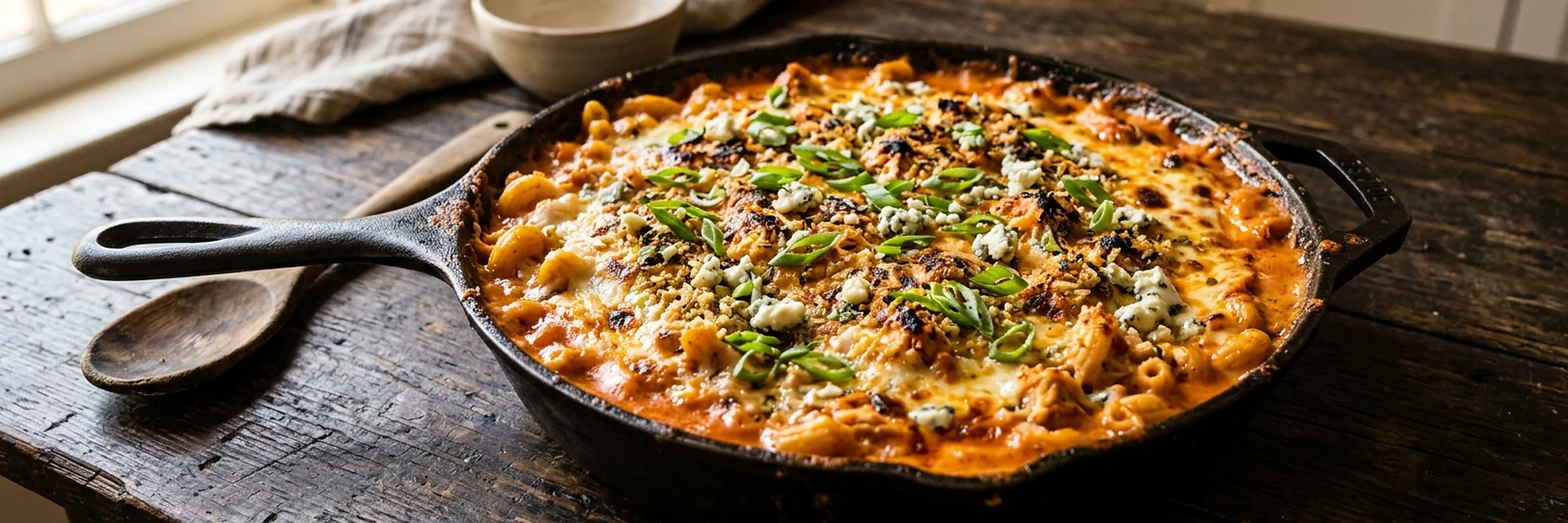
Quick Answer
Why does buffalo sauce curdle in pasta, and how do you fix it?Buffalo sauce's acidity (from the vinegar in hot sauce) causes dairy proteins in cheese or cream to coagulate and curdle when added directly. The fix: use cream cheese or heavy cream as an acid buffer before adding the hot sauce. Cream cheese's high fat content and stabilized protein structure resists curdling much better than shredded cheese. Add cream cheese first (let it melt into a smooth base), then stir in buffalo sauce off heat or at very low heat. The cream cheese effectively wraps the acid before it can reach the milk proteins in other cheeses.
Why Buffalo Sauce Causes Dairy Problems in Pasta
The same chemistry that makes buffalo sauce tangy - its high acidity from distilled vinegar - causes problems when combined with dairy in a hot environment. Milk proteins (casein) coagulate at low pH, which is exactly what happens when you add an acidic hot sauce to melted cheese over heat.
The visual result: the sauce breaks into a curdled, grainy texture instead of a smooth, creamy coating. The flavor is often fine (the curds still taste like cheesy buffalo sauce), but the texture becomes unappetizing - a pasta dish that looks separated and greasy rather than creamy and cohesive.
This is why recipes that tell you to "just add hot sauce to mac and cheese" often produce disappointing results. The technique matters.
Dairy Buffering Solutions
Three approaches that prevent curdling in buffalo sauce pasta:
1. Cream cheese as the primary dairy component: Cream cheese is already an emulsified, stabilized dairy product. Its protein structure has been processed to be resistant to breaking under heat and acid. When you build your sauce primarily from cream cheese (with shredded cheese secondary), the cream cheese acts as a buffer, melting into a smooth base before the hot sauce reaches any free-floating milk proteins.
Method: Melt cream cheese in the pan until smooth. Add butter and buffalo sauce. Whisk together off heat. Stir in shredded cheese last.
2. Heavy cream reduction: Building a heavy cream reduction before adding hot sauce creates a more stable sauce matrix. Heavy cream's high fat percentage dilutes the acid and provides a lipid buffer. Reduce 1 cup heavy cream until slightly thickened, add buffalo sauce while whisking, then finish with cheese.
3. Roux base: A traditional béchamel (butter + flour + milk) creates a starch-thickened base that stabilizes against acid better than plain dairy. Add buffalo sauce into a finished béchamel rather than into plain cheese. The starch granules trap proteins and prevent them from clumping under acid exposure.
Ingredients
- 12 oz short pasta (rigatoni, penne, or cavatappi)
- Reserved pasta cooking water (about 1/2 cup)
- Buffalo Cream Sauce:
- 4 oz cream cheese, softened and cubed
- 2 tablespoons unsalted butter
- 3-4 tablespoons Frank's RedHot Original (adjust to taste)
- 1/2 cup shredded sharp cheddar
- 1/4 cup shredded Gruyère or mozzarella
- 1/2 teaspoon garlic powder
- Toppings:
- Green onions, sliced
- Extra buffalo sauce
- Blue cheese crumbles
Method
- Cook pasta to al dente in well-salted water. Reserve 1/2 cup pasta water before draining.
- In the empty pasta pot over low heat, add cream cheese cubes and butter. Melt together, stirring constantly, until smooth - about 2 minutes.
- Remove pot from heat completely. Add Frank's RedHot. Whisk vigorously into the cream cheese-butter mixture until fully incorporated and smooth.
- Add shredded cheddar and Gruyère. Stir until melted. If the sauce is too thick, add pasta cooking water 2 tablespoons at a time.
- Add garlic powder. Taste and adjust buffalo sauce level.
- Add drained pasta. Toss until every piece is coated.
- Serve immediately topped with green onions, blue cheese crumbles, and an extra drizzle of buffalo sauce.
Tips
- Off-heat sauce addition is the most important step - adding the hot sauce while the pan is still on the burner is the most common cause of curdling.
- Pasta cooking water contains starch that helps the sauce cling and prevents separation if the sauce looks slightly thin.
- Cavatappi or rigatoni hold sauce best - their ridges and hollow tubes capture the creamy sauce in every bite.
Best Pasta Shapes for Buffalo Sauce
Not all pasta shapes hold creamy, clingy sauces equally well:
- Cavatappi (corkscrew): Ideal - the spiral captures sauce in the grooves, and the hollow center holds additional sauce. Best all-around choice.
- Rigatoni: The ridged exterior and hollow tube make it excellent for capturing thick, creamy sauces. Works particularly well when baked.
- Penne: Good choice - the angled ends and ridged surface create multiple sauce-grabbing contact points.
- Shells: The concave shape scoops and holds sauce like a spoon - every forkful is saturated.
- Avoid: Long pasta (spaghetti, linguine, fettuccine) - the sauce slides off the smooth surface of long noodles rather than clinging. Buffalo pasta sauce is thick enough that it tends to pile up instead of coating.
Why Off-Heat Matters
Milk protein coagulation under acid is accelerated by heat. At lower temperatures, the proteins stay more mobile and the sauce can maintain its emulsion. This is why cheese sauces are often finished off heat or at the lowest possible temperature - the same principle applies to buffalo sauce pasta. Once the heat is off, you can add acidic hot sauce and whisk it into cream cheese without triggering the curdling reaction that happens at higher temperatures.