Quick Answer
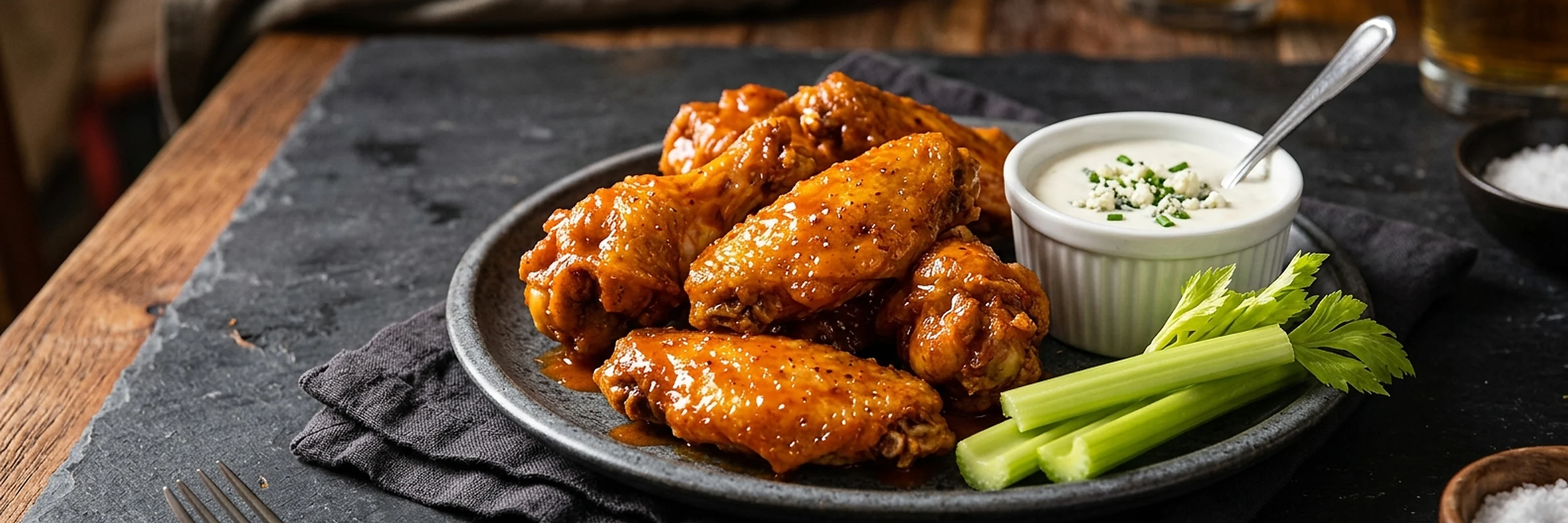
How do you make chicken wings crispier?The two highest-impact techniques: (1) Toss wings in 1 tablespoon baking powder per pound before cooking - the baking powder raises the skin's pH, accelerating Maillard browning and producing crispier skin. (2) Dry the wings uncovered in the refrigerator 1-24 hours before cooking - surface moisture is the enemy of crispy skin, and drying eliminates it. Combined, these two techniques produce oven-baked wings that approach deep-fried quality. For deep-fried wings: the double-fry method (first fry at 325°F for 8 minutes, rest 5 minutes, second fry at 375°F for 3 minutes) produces restaurant-quality crispiness. Apply buffalo sauce only after cooking - sauce applied before or during cooking creates steam that undoes the crispiness.
Why Wings Come Out Flabby: Understanding the Problem
Flabby, soft wing skin comes from one root cause: moisture. Chicken skin contains water (approximately 60%), subcutaneous fat, and protein. For skin to crisp, the water must evaporate, the fat must render, and the protein must undergo Maillard browning. Moisture blocks all three processes:
- Water must evaporate before the skin's surface can reach the 280°F+ needed for Maillard browning
- Undrained fat underneath wet skin can't render efficiently
- Wet skin steams rather than crisps - you need dry heat, not steam heat
Every crispy wing technique addresses the moisture problem from a different angle. Understanding this makes all the techniques intuitive rather than arbitrary.
Technique 1: Baking Powder - The Science of pH
Baking powder is the most widely used and most effective wing-crispiness technique for baked wings. The mechanism:
Maillard browning (the reaction that creates crispy, golden skin) occurs faster in alkaline (higher pH) environments. Chicken skin is naturally slightly acidic. Baking powder contains sodium bicarbonate, which is alkaline. Coating wing skin with baking powder raises the skin's pH from approximately 5.9 to 7-8.
At higher pH, Maillard browning occurs at lower temperatures and faster rates - skin that would take 45 minutes at 425°F to brown sufficiently now browns in 30-35 minutes, and browns more thoroughly. The accelerated browning also means more moisture evaporation, which directly produces crispier skin.
How to use: Combine 1 tablespoon baking powder (not baking soda - different chemistry) + 1 teaspoon salt + 1 teaspoon garlic powder per pound of wings. Toss the pat-dry wings in this mixture until evenly coated. Let sit at least 10 minutes (ideally overnight) before cooking.
Use Baking Powder, Not Baking Soda
Baking powder and baking soda are not the same. Baking soda (sodium bicarbonate, pure) is approximately 3-4x more alkaline than baking powder, which contains baking soda plus cream of tartar as an acid buffer. Using straight baking soda at the same amount as baking powder will over-alkalize the skin and produce an off-metallic taste. Use only baking powder in this application, specifically aluminum-free baking powder (brands like Rumford) - regular baking powder with aluminum can leave a metallic taste on skin cooked at high heat.
Technique 2: Overnight Refrigerator Drying
Drying wings uncovered in the refrigerator before cooking addresses the moisture problem at its source. The refrigerator provides a continuously dry, cold environment where the skin surface slowly dehydrates.
After just 1 hour of uncovered refrigerator drying, wing skin is noticeably drier to the touch. After 8-12 hours (overnight), the outer layer of skin is partially dehydrated and significantly more prone to rapid crisping when heat is applied.
Combined with baking powder: Apply the baking powder mixture, then refrigerate uncovered overnight. This produces wings that are surface-dried and pH-modified before cooking ever begins - maximum setup for crispiness.
Practical notes: Place wings on a wire rack over a baking sheet (not directly on the sheet - airflow around the wings dries the skin more evenly). Cover loosely with plastic wrap if concerned about odor absorption, but uncover for the last 30 minutes. This is the single best thing you can do for oven-baked wing crispiness.
Technique 3: The Double-Fry Method
The double-fry is how professional kitchens achieve the extreme crispiness that's difficult to replicate at home with single-fry methods:
- First fry (325°F, 8-10 minutes): Cook wings through completely. At 325°F, the exterior doesn't aggressively crisp - but the fat renders from the skin and most of the moisture evaporates slowly. Wings should be pale golden, cooked through to 165°F+, and slightly less crispy than desired.
- Rest (5-10 minutes): Remove from oil and rest on a wire rack. During this rest, residual moisture in the skin evaporates further - the skin becomes drier than it was right out of the oil.
- Second fry (375°F, 2-4 minutes): Return rested wings to hotter oil. Now the skin is dry (moisture rendered in the first fry), fat-free (fat rendered in the first fry), and ready to crisp rapidly. At 375°F, this final fry produces extreme crispiness within minutes.
The double-fry can be done in stages - first fry early in the day, final fry right before serving. This is the restaurant technique that allows batch cooking while still serving crispy wings to order.
Technique 4: Cornstarch Coating
Cornstarch coating produces a different type of crispiness than baking powder - thinner, crunchier, and more glass-like:
Cornstarch (pure starch) forms a very thin, rigid layer on the wing skin when fried. As the starch gelatinizes and then dehydrates in the hot oil, it creates a thin, crispy coating over the skin. The skin itself also crisps underneath. The combined effect is a wing with an extra layer of crunch.
How to use: Toss patted-dry wings in 2 tablespoons of cornstarch per pound, combined with salt and garlic powder. For deep frying: this is highly effective. For oven baking: less effective than baking powder (the cornstarch gelatinizes but doesn't produce the same Maillard-accelerating effect). For air frying: very effective - the circulating hot air dehydrates the cornstarch coating rapidly.
Crispy Wing Techniques by Method
| Technique | Best For | Difficulty | Impact |
|---|---|---|---|
| Best: Baking powder | Oven, air fryer | Low | Very high |
| Overnight dry | All methods | Low (just time) | High |
| Double-fry | Deep frying only | Medium | Very high |
| Cornstarch coating | Deep fry, air fryer | Low | High |
| Oil temperature control | Deep frying only | Medium (needs thermometer) | High |
| Wire rack elevated baking | Oven | Low | Medium |
Technique 5: Oil Temperature Control
For deep-frying, oil temperature is the primary control over crispiness. See the complete wing cooking temperatures guide for the full breakdown, but the key points:
- Start oil at 385°F so that when you add cold wings (which drop the oil temp significantly), you land in the 350-365°F cooking range
- Use a thermometer - guessing oil temperature produces inconsistent results
- Don't overcrowd the fryer - too many wings at once drops the oil temperature below the crispiness threshold. Cook in batches.
- The best oil for crispiness is peanut oil (450°F smoke point) - see the detailed guide to best oil for frying wings
Technique 6: Never Apply Buffalo Sauce Before Cooking
The easiest crispy wing mistake to fix: applying buffalo sauce before or during the cook. Buffalo sauce contains butter (smoke point 300°F) and liquid hot sauce (water-based). Applied before cooking:
- The water in the hot sauce creates steam around the wing, making it impossible for the skin to dry and crisp
- The butter burns at frying and high oven temperatures, creating dark, bitter exterior
- The skin underneath the sauce never reaches the dry heat needed for Maillard browning
Always cook wings fully first, then toss in sauce right before serving. The wing's heat activates the sauce and the two come together perfectly without compromising crispiness. This is the fundamental rule of buffalo wing preparation.