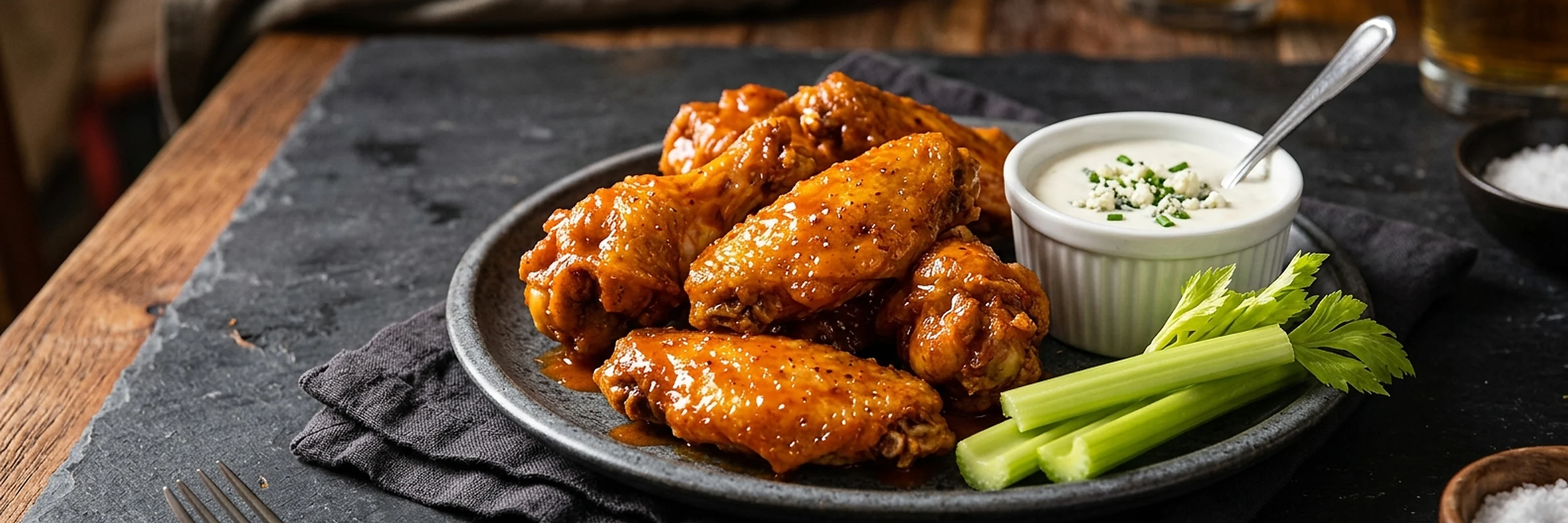
Quick Answer
What makes buffalo wings crispy?Two mechanisms: (1) moisture removal - the skin must be dry for crispiness; moisture creates steam that softens the skin. (2) Fat rendering - the fat between the skin and meat must fully liquefy and leave the skin for maximum crispiness. Techniques that work: pat wings completely dry before cooking, refrigerate uncovered 30 minutes to 24 hours (dry brine), use a wire rack to allow air circulation below, and add 1 teaspoon baking powder per pound to the dry rub (raises skin pH, accelerating browning). Deep frying achieves both mechanisms simultaneously; oven methods require more technique to match.
The Science of Crispy Chicken Skin
Chicken skin is a complex structure: a thin collagen-protein matrix filled with subcutaneous fat cells, covered by a thin outer layer. For crispy skin, two things must happen:
- Moisture removal: Water in the skin must evaporate. Water content in fresh chicken skin is approximately 40-60%. As this moisture evaporates during cooking, the skin collapses onto itself and becomes thin and rigid rather than puffy and soft. Moisture that stays in the skin steams from inside, keeping it soft.
- Fat rendering: The fat cells in the subcutaneous layer must rupture and release their fat. This happens between 160-180°F. When fat renders out, the skin becomes thinner and the remaining protein matrix can harden and crisp. Unreached fat = greasy, soft skin.
Additionally: Maillard browning (the reaction between amino acids and sugars under heat) creates the hard, complex brown crust that contributes to crunch. This reaction accelerates above 280°F.
Techniques That Maximize Crispiness
In order of impact:
- Pat dry before cooking: The single most important step. Use paper towels to remove all surface moisture. Any water remaining on the skin surface must evaporate before browning can begin - it delays and inhibits crispiness.
- Wire rack + baking sheet: Elevating wings from the pan surface allows fat to drip away and hot air to circulate underneath. Wings sitting in their own rendered fat don't get crispy on the bottom.
- High heat: 425-450°F for oven wings. Lower temperatures don't drive moisture out fast enough. The fat renders more slowly at lower heat, leaving more fat in the skin.
- Dry brine (salt + time): Salting wings and refrigerating uncovered for 1-24 hours. Salt draws moisture out of the skin initially, then is re-absorbed as brine - but the net effect after refrigeration is drier skin. The uncovered refrigerator air also accelerates surface drying through evaporation.
- Baking powder: Small amounts of baking powder in the dry rub react with the skin to raise surface pH. Higher pH accelerates Maillard browning, producing crispier, more brown skin at the same temperature. See below.
Why Baking Powder Works
Adding 1 teaspoon baking powder per pound of wings to the dry rub is a widely used restaurant technique for crispier oven wings. Why it works:
Baking powder contains sodium bicarbonate (baking soda), which is alkaline. When it contacts the chicken skin in the presence of moisture and heat, it raises the pH of the skin surface. The Maillard reaction (browning) is accelerated in alkaline conditions - this is the same principle behind pretzel making (pretzels are dipped in a lye solution before baking, creating their distinctive brown, crispy exterior).
Higher pH + heat = faster, more extensive browning at the same temperature. The effect: wings cooked with baking powder brown faster, develop a harder exterior crust, and appear more deeply colored - all markers of crispy skin.
Important: use aluminum-free baking powder. Baking powder with aluminum imparts a metallic taste. Use roughly 1 teaspoon per pound of wings.
The Dry Brine Method Step by Step
- Pat wings completely dry with paper towels.
- Mix: 1 teaspoon kosher salt + 1 teaspoon baking powder + 1/2 teaspoon garlic powder per pound of wings.
- Toss wings in the dry rub.
- Arrange on a wire rack over a baking sheet.
- Refrigerate uncovered for at least 30 minutes, ideally 8-24 hours.
- Cook directly from the refrigerator - no additional drying step needed.
The overnight dry brine produces noticeably crispier wings than even freshly-dried wings because the surface has had extended time to dehydrate. Restaurant prep typically involves the overnight or multi-hour brine.
Why Deep Frying Works So Well
Deep frying at 375°F achieves both moisture removal and fat rendering simultaneously and aggressively. The hot oil (175°C) makes direct contact with every surface of the wing at once, driving out moisture (which appears as bubbling in the oil) and heating the skin fat above its melting point from all sides simultaneously. The result is crispiness that oven methods struggle to match without extended cooking times.
Crispy-Killer Mistakes
- Cooking from frozen without thawing: Frozen wings release large amounts of ice as steam during cooking, creating the opposite of the dry environment needed for crispy skin.
- Crowding the pan: Wings touching each other trap steam between them. Steam keeps the skin moist. Single layer with space between each piece is required.
- Flat pan instead of wire rack: Wings sitting on a flat surface steam from below in their own fat.
- Saucing too early (oven method): Applying buffalo sauce before or during oven cooking adds liquid to the skin, undoing the drying work. Always sauce after the wings are done.
- Low oven temperature: 350°F doesn't produce enough surface heat quickly enough. Moisture lingers longer than at 425°F, reducing crispiness.