Quick Answer
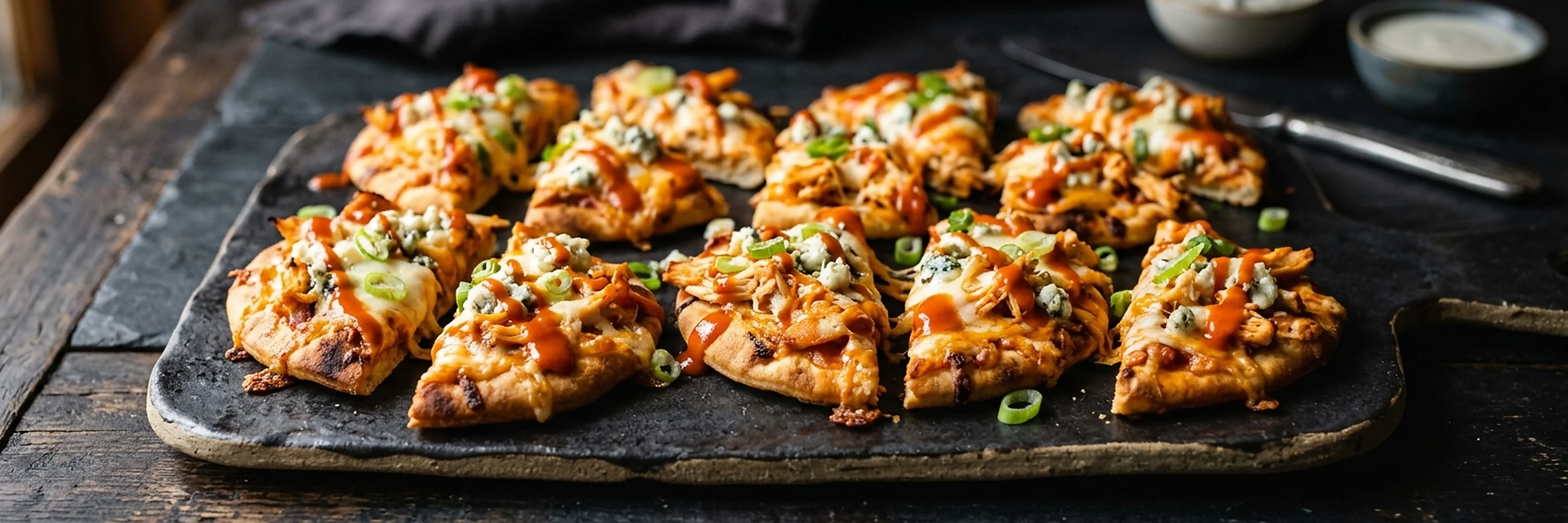
How do you make buffalo chicken flatbread pizza?Brush flatbread with a thin layer of buffalo-ranch sauce (equal parts buffalo sauce and ranch dressing), top with shredded buffalo chicken, then mozzarella cheese. Bake at 425°F directly on the oven rack (not on a pan) for 8-10 minutes until the edges are crispy and the cheese is bubbly. Remove and immediately top with crumbled blue cheese, sliced red onion, and a drizzle of ranch. The oven-rack method crisps the bottom of the flatbread without a pizza stone. Using pre-baked flatbread (like naan or lavash) rather than raw dough means the flatbread cooks in the same time as the toppings - no pre-baking needed.
Choosing the Right Flatbread
The flatbread choice determines the texture and personality of the finished pizza:
- Naan (Indian flatbread): Thick, chewy, slightly tangy from yogurt. The most forgiving option - holds up well to wet toppings and doesn't get soggy easily. Has its own flavor that adds to the overall taste. Best if you want a substantial, bread-forward flatbread pizza.
- Lavash (Armenian flatbread): Thin, crispy, cracker-like. Bakes very fast (6-7 minutes) and becomes shatteringly crispy. Best if you want a cracker-base pizza closer to flatbread crackers than bread. Less forgiving of excess moisture from toppings.
- Pita bread: Round, slightly pocketed, medium thickness. The pocket can trap steam and make the inside chewy rather than crispy - some people prefer this, others find it soggy. Poke a few holes in the pita before baking to allow steam to escape.
- Store-bought Stonefire Naan or similar: Pre-packaged naan is the most consistent and convenient option. Garlic naan adds extra flavor that works well with buffalo chicken.
- Avoid raw pizza dough or crescent roll dough: These require longer cooking times than the toppings, producing either undercooked dough or overcooked toppings. Use pre-baked flatbread.
The Sauce Base Formula
Standard pizza uses tomato sauce as the base. Buffalo chicken flatbread uses a different base to complement the topping flavor:
- Buffalo-ranch blend: Equal parts buffalo sauce + ranch dressing, mixed together. This creates a sauce base that has the tangy heat of buffalo sauce moderated by ranch's creaminess and herb flavor. It's thicker than buffalo sauce alone (ranch adds body) and doesn't make the flatbread soggy under the toppings. Use approximately 2-3 tablespoons for a personal flatbread.
- Ranch-only base: Some preparations use just ranch as the base, then add buffalo sauce separately in the chicken toss. Cleaner to execute; slightly less integrated flavor.
- Avoid straight buffalo sauce as the base: Undiluted buffalo sauce is too thin and acidic to work as a pizza base - it soaks into the flatbread and makes it soggy within minutes of applying. Always mix with something thicker (ranch, cream cheese blended thin, or sour cream).
The difference between buffalo sauce and hot sauce is relevant here: buffalo sauce contains butter and may separate when used as a thin base under heat. The buffalo-ranch blend is more stable because ranch's emulsifiers help hold the butter in suspension.
Topping Order and Logic
The order toppings go on flatbread pizza matters more than with traditional thick-crust pizza:
- Sauce base directly on flatbread: A thin, even layer. Don't over-apply - flatbread has less structural depth than pizza dough and can't absorb as much sauce without becoming soggy.
- Chicken second: Shredded chicken that's already been tossed in buffalo sauce. The chicken on top of the sauce base means the sauce base doesn't need to carry all the buffalo flavor - the chicken contributes its own.
- Mozzarella last (before baking): The cheese layer goes on top of the chicken. This seals the chicken under the cheese during baking, preventing it from drying out. The melted cheese also holds the chicken in place so it doesn't slide off when cutting.
- Finishing toppings after baking: Blue cheese, red onion, fresh herbs, and ranch drizzle go on immediately after removing from the oven. These are cold-contrast toppings; they should not be cooked.
Ingredients
- 2 pieces naan or flatbread (personal size)
- Sauce Base:
- 2 tablespoons buffalo sauce
- 2 tablespoons ranch dressing
- Mix together into a sauce base.
- Toppings:
- 1.5 cups shredded cooked chicken
- 2 tablespoons buffalo sauce (for tossing chicken)
- 1 cup shredded mozzarella
- Finishing Toppings (added after baking):
- 1/4 cup crumbled blue cheese
- 1/4 red onion, thinly sliced
- 2 green onions, sliced
- 2 tablespoons ranch dressing for drizzling
- Celery leaves (optional, for freshness)
Method
- Preheat oven to 425°F. Position oven rack in the middle.
- Toss shredded chicken with 2 tablespoons buffalo sauce. Set aside.
- Mix buffalo sauce and ranch dressing together to make sauce base.
- Spread sauce base thinly across each flatbread, leaving a 1/2-inch border.
- Distribute buffalo chicken evenly across both flatbreads.
- Top with shredded mozzarella.
- Place flatbreads directly on the oven rack (not on a pan - this allows heat to crisp the underside). Bake 8-10 minutes until cheese is bubbly with some golden spots and the edges of the flatbread are crispy.
- Remove from oven. Immediately top with blue cheese crumbles, red onion, and green onions.
- Drizzle with ranch. Slice and serve immediately.
Tips
- Preheating is crucial for the direct-rack method. A cold oven produces a pale, soft flatbread. The high heat and pre-heated rack together produce the bottom crispiness without a stone.
- If the edges are browning faster than the cheese is melting: loosely tent with foil and continue baking 2 more minutes. This is more likely with lavash (thin) than naan (thick).
- For a party: use small, individual flatbreads or cut standard flatbreads into quarters before assembly. Personal-sized portions allow guests to take one without needing to slice, and they bake in the same time as full-size.
The Direct Rack Method
Placing the flatbread directly on the oven rack (rather than on a baking sheet) is the single most impactful change for flatbread pizza texture. On a baking sheet, the bottom of the flatbread is insulated by the pan and steams rather than crisps - the result is a soft, slightly doughy underside. On the rack, hot oven air circulates directly under the flatbread, crisping it from below while the top heat melts the cheese from above. The result is a flatbread with a crispy, cracker-like bottom and a bubbly cheese top. Use tongs to carefully slide the flatbread onto and off the rack.